

A lot of players, after a string of losses or a near-miss, start to feel like a win has to be coming. That feeling is based on a specific assumption: that past results make a future win more likely. That assumption is wrong. This page explains what determines each outcome, why losing streaks and near-misses tell you nothing about what comes next, and what the math behind casino odds looks like. By the end, you’ll be able to spot this kind of thinking when it shows up and read your session results more accurately.
The Belief That a Machine Is “Due” and What It Actually Assumes
“Due for a win” is a specific, named gambling myth. It’s catalogued by casino operators, government gaming agencies, university gambling clinics, and problem gambling organisations. The belief is widespread enough that institutions like the University of Memphis Gambling Clinic and responsiblegambling.org address it directly in player-facing materials. The belief breaks down at a specific point: the assumption about how randomness works. Understanding that assumption makes it easier to spot the belief in any form.
The belief tends to come up after a run of losses, a near-miss, or a long session without a payout. Players treat it as a real read on the machine, a signal that the next bet carries better odds than earlier ones did. The University of Memphis Gambling Clinic and responsiblegambling.org both catalogue it as a named myth and document the specific phrases it travels under.
- “It has to hit soon”, used after an extended losing streak, treating accumulated losses as evidence a win is approaching.
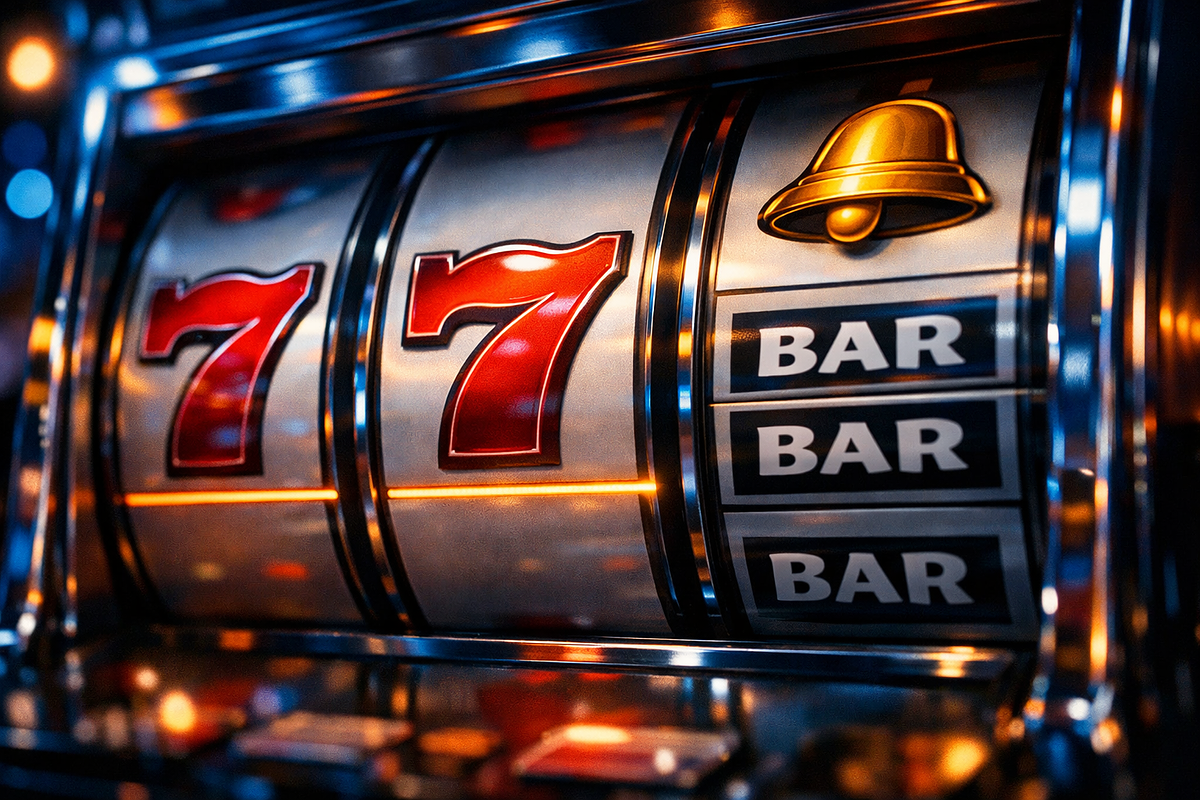
- “I almost won, so the next one is mine”, used after a near-miss, treating visual proximity to a winning combination as a predictive signal.
- “This machine hasn’t paid all night”, used after a long session without a payout, treating session length as something that raises the probability of the next outcome.
- “I must be due for a win”, the direct form of the belief, used whenever prior losses are framed as building toward an inevitable win.
Every version of the “due for a win” belief rests on the same assumption: that past outcomes influence future ones, and specifically that a string of losses raises the probability of the next win. This is what probability theory calls the gambler’s fallacy. The University of Memphis Gambling Clinic states directly that future gambling outcomes are not influenced by previous outcomes, a position independently confirmed by responsiblegambling.org. The mechanics that govern casino games simply don’t work in a way that supports this assumption, which is why the belief fails no matter how it’s phrased.
Independent Events and the Mechanism That Produces Them
“Due for a win” fails because of how electronic gambling outcomes are produced. Modern slot machines and electronic table games generate each result through a random number generator, a device that makes every spin, hand, or bet statistically independent from the last. That design means no outcome carries any information about the next one, and no sequence of losses creates pressure toward a win.
Statistical independence means each spin’s outcome is generated with no reference to what came before it. The probability of any result on this spin is the same as it was on the first spin of the session and the same as it will be on the thousandth. The system has no memory. A long losing streak is just a sequence of independent losses, each one unconnected to the others. It doesn’t build any pressure toward a win on the next play.
A random number generator runs continuously, cycling through values at high speed even when no one is playing. When a player triggers a spin, the outcome is fixed by whichever value the generator lands on at that moment. That result isn’t conditioned on any prior result. The generator doesn’t check a record of previous spins before producing the current one. The machine isn’t building toward anything. It’s a series of isolated, unconnected events, each one settled independently the instant it’s triggered.
Because each event is statistically independent, raising your stake or playing longer doesn’t change the probability of the next outcome. As Anglicare Tasmania’s responsible gambling materials state directly, the odds are no more in a player’s favour on the tenth bet than they were on the first. A larger bet placed after a string of losses carries the same underlying probability as the opening bet of the session. Only the dollar amount at risk is different. Thinking that playing longer earns a win is the same fallacy as “due for a win,” just phrased differently.
Near-Misses and Why “Almost Won” Carries No Predictive Weight
Of all the signals players read into a machine, the near-miss is the most powerful and the most misleading. Two matching symbols with a third just off the payline, or a card that falls one short of completing a hand, creates a strong sense of being close to a win. That feeling is real. As a prediction about the next outcome, it means nothing. The University of Memphis Gambling Clinic and responsiblegambling.org both identify “almost winning” as a named gambling myth, stating directly that it carries no implication about what follows.
Statistically, a near-miss is a loss. It carries the same predictive value as any other loss: none. The visual proximity of the displayed symbols to a winning combination is a display artifact. It describes how the result looks on screen, not what the next spin’s probability will be. Because each spin is an independent event with no memory of prior outcomes, a near-miss isn’t evidence you’re close. It’s just one of the many shapes a loss can take. Responsiblegambling.org puts it plainly: “‘Almost’ winning in no way means that a real win is just around the corner.”
Near-misses trigger a strong anticipation response, which is why they feel like progress rather than plain losses. That response comes from how symbols are displayed and how the outcome is presented, not from anything about probability. The distinction worth drawing is this: “this felt close” is a statement about perception. “This was close” would be a statement about probability. Only the first one is accurate. The felt sense of proximity has no mechanical connection to the fixed odds that govern the next spin.
The Emotional Function of “One More Bet”
Once the math is clear (each spin is independent, odds don’t shift, and no losing streak builds toward a win), a different question comes up: if the belief is false, why does it keep showing up? The answer is that “due for a win” and “one more bet” function less as probability estimates and more as phrases that make continued play feel rational at moments when the underlying math hasn’t changed. Gambling-awareness sources treat these phrases in exactly those terms, identifying them as signals that appear at specific emotional moments rather than as genuine reads on a game’s state.
Both “due for a win” and “one more bet” tend to surface at moments of loss, frustration, or when a player is approaching a limit they set before the session began. Their function is to reframe continued play as a reasoned decision, even though the probability of the next outcome is identical to what it was on the first bet. Pennsylvania’s Department of Drug and Alcohol Programs uses “just one more bet” as a recognised signal phrase in its public gambling-disorder messaging, treating it not as a prediction but as a behavioural cue worth flagging. Recognising the phrase as an emotion-management tool, rather than a read on the machine, lets a player hear it accurately when it surfaces in their own thinking. It marks an emotional state, not a change in odds.
The correction of “due for a win” isn’t the position of a single source. State gaming regulators, university gambling clinics, national problem gambling organisations, and industry responsible-gaming frameworks each address the belief independently and reach the same conclusion: it’s a formally catalogued myth that requires explicit correction in materials directed at players. The American Gaming Association’s responsible gaming regulations guide covers “Addressing Myths Associated With Gambling” as a named category within player-information requirements across 38 jurisdictions, and individual state frameworks, including those in Connecticut and Oregon, expressly require that operators provide players with information on gambling myths.
The table below shows the categories of institutions that address this myth and the type of correction each provides.
| Source Category | Position on “Due for a Win” | Type of Correction Issued |
|---|---|---|
| State-level gaming regulator | Treats the belief as false; prohibits advertising that implies higher odds guarantee wins or that games produce winning streaks | Regulatory prohibition on misleading advertising; formal player-information requirements across multiple jurisdictions |
| University-based gambling clinic | Identifies “due for a win” and “almost won, must be due” as named gambling myths; states directly that future outcomes are not influenced by previous outcomes | Clinical myth identification in published player-education materials |
| National problem gambling awareness organisation | Catalogues the belief as a named myth; independently confirms that future gambling outcomes are in no way influenced by previous outcomes | Public-awareness messaging directed at players, including signal-phrase identification in outreach campaigns |
| Industry responsible-gaming framework | Treats addressing gambling myths as a formal compliance category; requires that platforms avoid reinforcing myths in game play and communications | Formal player-information requirement embedded in responsible-gaming standards applied across multiple jurisdictions |
Constant Odds Across Every Bet, Regardless of History
The odds of any given outcome are a fixed property of a game’s design. They don’t change between the first bet of a session and the last. Because each spin or hand is statistically independent, prior outcomes carry no predictive weight over the next one. Framing losses as evidence a win is approaching fails for the same reason as framing a winning streak as evidence a cold run is coming: neither past sequence changes the probability built into the game’s mechanics. Anglicare Tasmania’s gambling education materials put it directly: “The odds are no more in a person’s favour on the tenth bet than they were on the first bet.”
With constant odds and independent events in mind, common session experiences can be read accurately rather than through the lens of “due for a win.” Each of the following experiences feels meaningful in the moment, but the mechanism behind it is the same every time: the next outcome’s probability is unchanged. The list below shows how the same session experience reads differently once that’s understood.
- A long losing streak: a sequence of independent losses, not accumulating pressure toward a win.
- A near-miss: a loss displayed close to a winning combination, carrying no predictive signal about the next spin.
- A cold machine: a machine whose recent results happen to have been losses, with unchanged odds on the next spin.
- A hot machine: a machine whose recent results happen to have been wins, also with unchanged odds on the next spin.
- A larger bet after losses: a bet at the same underlying probability as the first bet of the session, only with more money at stake.
Reading the Next Spin for What It Actually Is
Understanding that each spin is independent changes how you read a session in real time. A losing streak, a near-miss, and a long cold run each feel like they’re building toward something. They’re not. Once that’s clear, the “due for a win” belief becomes easy to spot the moment it surfaces, in any phrasing, as a misreading of the game rather than a genuine read on it.
We check operator terms, licences and payment details against the casino's own pages and update this content when they change. Read our editorial policy, our transparency statement, or report an error. If gambling stops being fun, see our responsible gambling resources.