


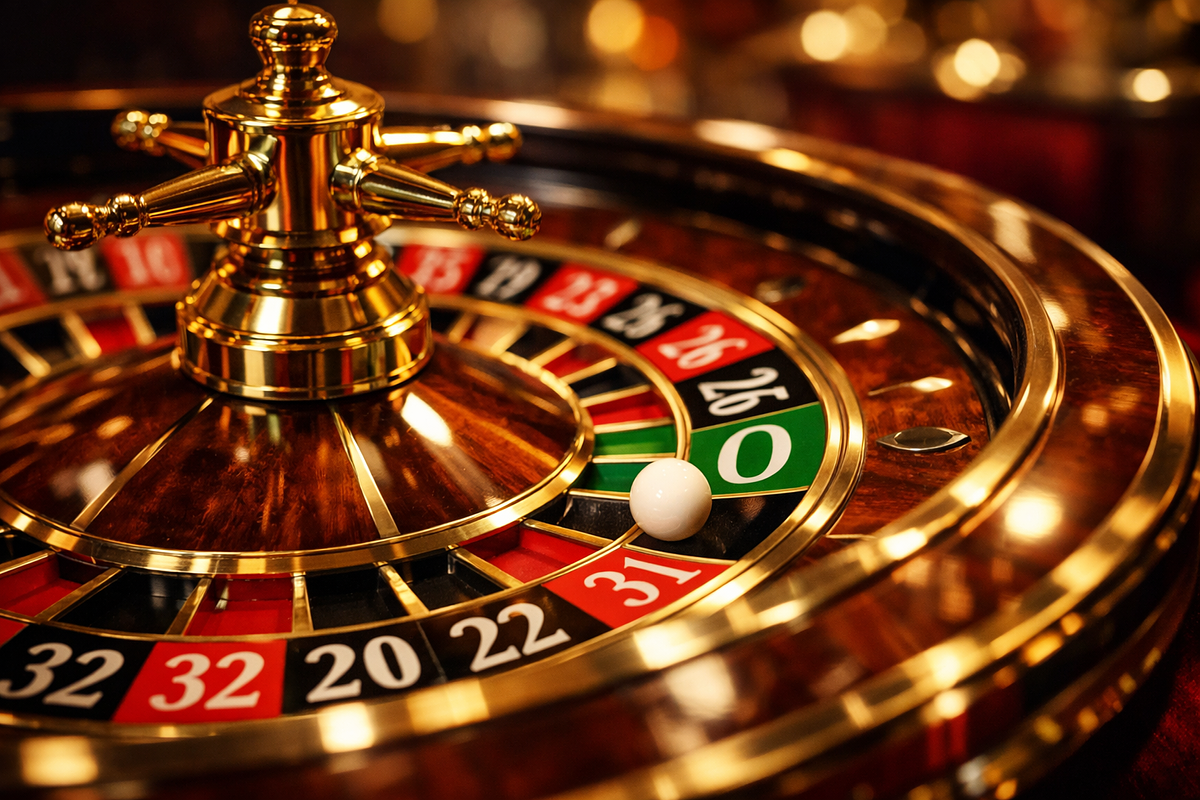
This page explains European roulette rules for Canadian players who want to understand the game before they play. The wheel has 37 numbered slots and a single green zero pocket. That’s what sets it apart from the double-zero version more commonly found at Canadian land-based casinos, and it changes the odds in a real way. This guide covers the wheel layout, available bet types, how payouts are calculated, and the special rules that apply to even-money wagers. By the end, you’ll have enough to follow the game confidently and decide whether European roulette suits how you want to play.
The Single-Zero Wheel and Its Structural Foundation
European roulette is built around a wheel with 37 numbered slots and a single green zero pocket. That physical setup is where every probability and payout figure in the game comes from. If you’re playing at a Canadian venue where the double-zero wheel is the more common default, the first thing worth doing before you place any bet is checking how many zero pockets the wheel has.
The European wheel has 37 slots numbered 0 through 36: one green zero pocket and 36 alternating red and black numbered pockets. Since all 37 slots are the same size and the ball is equally likely to land in any one of them, the base probability of hitting any single number is 1 in 37. Counting the zero pockets is the quickest way to identify which version you’re looking at. One green pocket means European; two means American. That works whether you’re at a physical table or playing on a regulated online casino.
Payouts across all bet types on the European wheel are calculated as if only 36 numbers exist, even though 37 are actually there. That gap between the payout basis and the real slot count is how the casino keeps its margin on every spin. The result is a house edge of 2.70% on all standard bets. Knowing that figure comes directly from the wheel’s structure gives you a stable reference point for checking any odds claim you come across in the game.
Inside Bets and Their Payout Structure
Inside bets are placed directly on individual numbers or small groups within the numbered grid on the layout. Because each one covers fewer of the 37 possible outcomes, they hit less often than outside bets, and the payouts are higher to match. The relationship between coverage and payout follows a single formula: (36 divided by numbers covered) minus 1. Every inside bet payout comes from that formula.
Each inside bet is defined by how many numbers a single chip placement covers, and the payout changes in direct proportion to that coverage. Once you know the formula, you can figure out what any inside bet pays by looking at where the chip sits on the layout. No separate memorisation needed.
| Bet Type | Numbers Covered | Payout | Win Probability |
|---|---|---|---|
| Straight-up | 1 | 35:1 | 2.70% |
| Split | 2 | 17:1 | 5.41% |
| Street | 3 | 11:1 | 8.11% |
| Corner | 4 | 8:1 | 10.81% |
| Line | 6 | 5:1 | 16.22% |
The formula (36 divided by numbers covered) minus 1 connects every inside bet’s payout to its coverage on the 37-slot European wheel. If you know how many numbers your chip placement covers, you can check whether the payout shown at a Canadian table or on an online interface matches the standard rate. The layout itself shows you the coverage, so you can verify any displayed figure on the spot without needing to memorise each payout separately.
Outside Bets and Even-Money Categories
Outside bets cover broad groups of numbers rather than specific positions on the numbered grid. They cover colour, parity, numerical halves, columns, and dozens, and they pay less per win than inside bets because they come in more often. Within this category, red/black, odd/even, and high/low form their own subgroup: all three pay 1:1 and are the only bets that interact with the special zero-outcome rules covered later. Column and dozen bets sit in a separate tier, paying 2:1 with narrower coverage.
Outside bets split into two tiers based on how much of the wheel they cover. The even-money tier covers roughly half the numbered slots and returns your stake plus an equal amount on a win. The 2:1 tier covers roughly one-third of the numbered slots and returns your stake plus twice that amount on a win. Knowing which tier a bet belongs to lets you read the payout correctly without checking the table layout every time.
| Bet Type | Coverage | Payout | Win Probability |
|---|---|---|---|
| Red / Black | 18 numbers | 1:1 | 48.65% |
| Odd / Even | 18 numbers | 1:1 | 48.65% |
| High / Low (1–18 / 19–36) | 18 numbers | 1:1 | 48.65% |
| Column | 12 numbers | 2:1 | 32.43% |
| Dozen | 12 numbers | 2:1 | 32.43% |
Even-money bets cover 18 of the wheel’s 37 slots. The green zero pocket doesn’t belong to either colour, either parity group, or either numerical half, so it falls outside all three even-money categories. That one excluded slot is why the win probability for each of these bets is 48.65% rather than 50%. Calling them a “50/50” proposition ignores the zero and overstates your actual chances on any given spin.
Announced Bets and French-Terminology Wagers
Announced bets are pre-declared wagers based on where numbers sit around the physical wheel, not where they appear on the betting grid. You call the bet before the spin, and the house places the required chips across a fixed set of numbers that form a continuous arc on the wheel. Each configuration covers a defined segment of the wheel with a set chip count, so you’re committing a specific total stake in a single call. These bets aren’t available everywhere. House rules determine whether a given Canadian venue offers them, and their presence in regulated online products varies by operator.
Three named announced bets divide the European wheel into segments by wheel position. Each covers a distinct arc of numbers with a fixed chip requirement. Knowing which arc each name refers to lets you read a French-language betting mat or an online race-track interface accurately, since the labels on those layouts refer to wheel geography rather than grid position. The table below shows the segment, number count, and chip requirement for each configuration.
| Announced Bet | Wheel Segment Covered | Numbers Covered | Chip Requirement |
|---|---|---|---|
| Voisins du Zéro (neighbours of zero) | Segment adjacent to zero | 17 | 9 chips |
| Tiers du Cylindre (opposite third) | Segment across from zero | 12 | 6 chips |
| Orphelins (remaining segments) | Two remaining arcs | 8 | 5 chips |
Even-Money Rule Variants That Modify the House Edge
Two optional rules, La Partage and En Prison, can apply to even-money bets on a European roulette table when the ball lands on zero. Both rules are triggered by the same event and only affect even-money bets. When either rule is in force, the cost of placing an even-money bet drops below the base European house edge of 2.70%. If you can spot which rule is posted at a given table, you’re looking at a meaningfully different game from one with no such rule.
Under La Partage, when zero lands the dealer immediately returns half your even-money stake and keeps the other half. That partial refund is what cuts the house edge: you lose only half a unit on a zero outcome instead of a full unit, which drops the effective house edge on even-money bets from 2.70% to 1.35%. At a Canadian table where La Partage is in effect, the true cost of a red/black or odd/even bet is 1.35%, not the base figure that applies to every other bet on the layout.
Under En Prison, a zero outcome doesn’t immediately settle an even-money bet. Instead, the bet is held in place (“imprisoned”) for the next spin. If that spin produces a winning outcome, your original stake is returned with no additional winnings. If it loses, the house collects the stake. The expected value of this mechanic is identical to La Partage, producing the same reduced house edge on even-money bets. Because the two rules are mathematically equivalent, you can treat En Prison and La Partage as interchangeable in terms of what they cost you, even though the procedure at the table looks different.
European versus North American Variant Comparison
The two main roulette variants differ in one structural feature: the North American wheel has a second green pocket marked double-zero, which the European wheel doesn’t have. That one extra pocket changes every odds and payout figure you’ll encounter, making the two variants mathematically distinct across every comparable dimension. The double-zero wheel is the standard format across Canada, the US, South America, and the Caribbean, while the single-zero wheel is the standard European format found elsewhere. Checking which wheel is in front of you is the first step toward verifying any odds claim attached to a given game.
The extra pocket in the North American variant produces clear, parallel differences in pocket count, house edge, even-money win frequency, and the composition and payout of the top line bet. Because each of these dimensions shifts in the same direction, identifying the variant from the wheel lets you verify every downstream figure without relying on posted signage or asking staff.
| Dimension | European Variant | North American Variant |
|---|---|---|
| Numbered slots | 37 (0, 1–36) | 38 (0, 00, 1–36) |
| House edge | 2.70% | 5.26% |
| Even-money win probability | 48.65% | 47.37% |
| Top line bet payout | 8:1 (covers 0, 1, 2, 3) | 6:1 (covers 0, 00, 1, 2, 3) |
Canadian Availability and Regulatory Context
The single-zero variant is available in Canada at select land-based destination casinos and through regulated online platforms operating within provincial frameworks. At least one major Canadian resort casino in Ontario is documented as offering single-zero roulette in a dedicated high-limit room alongside standard table game floors. Even so, the double-zero wheel remains the more common in-person default across Canada and nearby regions. If you assume the European variant is the standard offering at any given Canadian venue, you’ll likely find the American wheel instead.
The single-zero variant shows up at certain destination-tier Canadian casinos, typically in premium or private gaming rooms, and is also available through regulated online casino products. Canadian tables offering the European variant are documented as including announced bets, which let players pre-declare wagers covering specific segments of the wheel’s physical number sequence. Knowing this availability pattern lets you check in advance whether a particular venue or online lobby carries the single-zero game, rather than finding out on arrival that only the double-zero version is on the main floor.
Reading a Canadian Roulette Table with Confidence
Identifying the wheel variant is the foundation for reading everything else in the game. Payout rates, probability figures, and rule variants all depend on whether one or two zero pockets are present. Once you can make that identification at any Canadian table or online interface, you have the reference point you need to assess every figure the game presents on its own terms, rather than treating outcomes as random events with no structural explanation.
We check operator terms, licences and payment details against the casino's own pages and update this content when they change. Read our editorial policy, our transparency statement, or report an error. If gambling stops being fun, see our responsible gambling resources.