

Progressive jackpot slots in Canada fund their prize pools through a contribution mechanism where a fixed percentage of every qualifying wager goes into the pool, on top of a separately funded seed value. This article explains how that funding works, not how to win, and looks at how Canadian provincial regulation, particularly Ontario’s ring-fenced market, changes the standard model. It covers the per-wager contribution, the three pool structures, the seed value, and the provincial rules that determine which pools Canadian players can access.
The Core Funding Mechanism Behind a Progressive Prize Pool
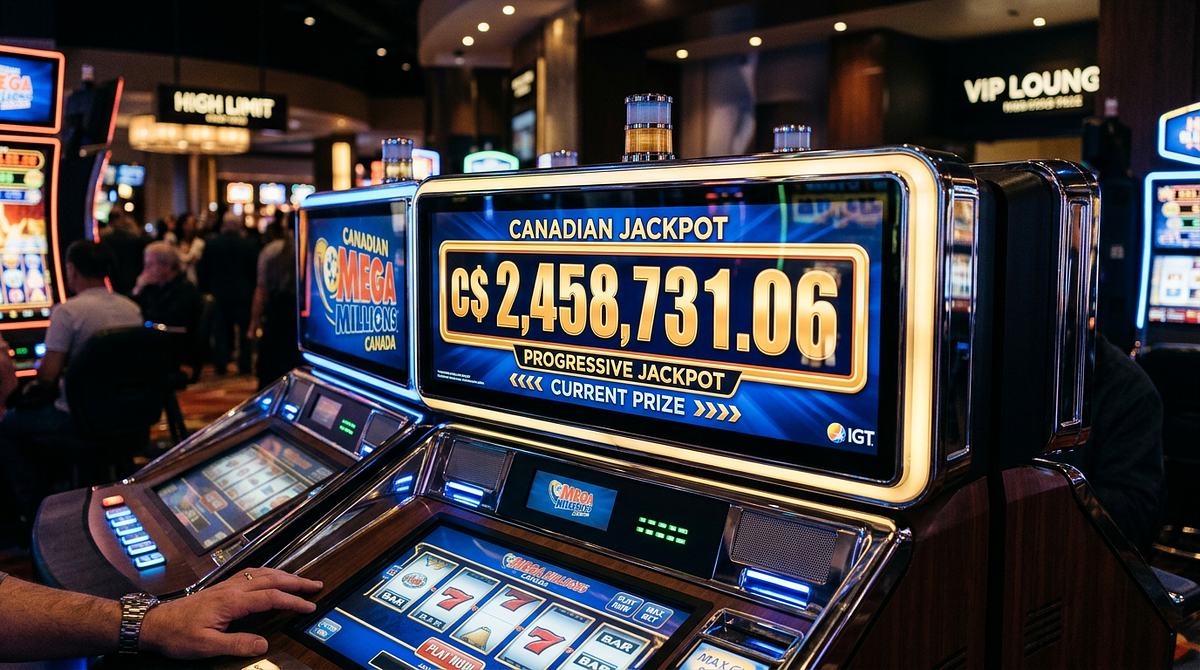
A progressive prize pool grows because a set percentage of every qualifying wager goes into the jackpot pool instead of the standard return-to-player (RTP) calculation. This is the foundation everything else builds on. The contribution is rule-based, not random, and it only applies to qualifying bets that meet the game’s minimum stake or bet-line requirements. The jackpot meter you see on screen shows accumulated player contributions on top of a separately funded starting amount, not contributions alone.
Knowing this lets you read “growing jackpot” marketing claims accurately and spot the difference between contribution-funded pools and tournament or promotional prize structures, which work on different logic.
The Percentage of Each Qualifying Bet That Feeds the Pool
Industry sources put the contribution percentage somewhere between 1% and 5% of each qualifying wager, though some publisher sources cite a narrower range of 0.5% to 2%. Shared multi-title network progressives typically fall in the 1% to 3% range. The exact figure is set by the game provider or operator and isn’t shown on most game information screens, so you can’t check it from inside the game.
A qualifying bet is one that meets the minimum stake threshold or activates the required paylines or features to be eligible for both the jackpot trigger and the contribution deduction. Bets below that threshold don’t contribute to the pool and can’t win the jackpot under any outcome.
This matters more than it might seem. Because the contribution percentage is taken out before the standard RTP calculation is applied to what’s left, progressive slots usually have a lower base-game RTP than non-progressive games from the same provider. Comparing a progressive slot’s headline RTP to a non-progressive slot’s RTP without accounting for that diverted contribution gives a misleading picture.
Why the Starting Value Is Funded Separately From Player Wagers
When a progressive jackpot is won, the meter resets to a predetermined starting value, commonly called the seed, rather than to zero. The seed is funded by the game provider or the operator, not by player wagers. In some regulated jurisdictions, the rules explicitly require the gaming entity to fund the seed itself rather than recover it from subsequent play.
This matters for two reasons. First, the starting value means the jackpot is never advertised at zero or some trivial amount, which keeps the game worth playing. Second, the operator or provider takes on a real cost every time the jackpot is won and the seed is deployed to reset the meter.
If you understand how the seed works, you can read “guaranteed minimum” jackpot claims for what they are: the reset value is a marketing floor set by casino-funded capital, not a sign that the pool has already started building meaningful contributions from post-reset wagers.
The Three Pool Structures That Determine How Fast a Jackpot Grows
The three types of jackpot pool structures are the main factor in how quickly a pool builds and how large it can get. The difference comes down to how many wagers are feeding the pool: one machine, one operator’s games, or a network across multiple operators or jurisdictions. Growth rate goes up with the volume of qualifying wagers contributing to the pool. That’s why network jackpots, which draw contributions from players across dozens of operators, reach the big headline numbers while standalone jackpots rarely do.
Community jackpot formats and other shared setups fit within this same framework, with their growth potential tied to how broadly the contributing wager base is defined.
The table below shows how each pool structure compares across the factors that determine growth potential and maximum realistic size.
| Pool Structure | Contribution Source Scope | Typical Growth Rate | Typical Maximum Size Range | Who Funds the Seed |
|---|---|---|---|---|
| Standalone Pool | Single machine or single game instance | Slowest | Smallest | Operator or provider |
| Local / In-House Pool | Multiple machines or games within a single operator | Moderate | Mid-tier | Operator or provider |
| Wide-Area Network Pool | Multiple operators, often across jurisdictions | Fastest | Largest | Provider |
How Canadian Provincial Regulation Alters the Standard Funding Model
iGaming in Canada is regulated at the provincial level, not federally. Each province with a regulated online gaming market runs under its own rules, and that fragmentation is why Canadian progressive jackpot pools work differently from those in unified national markets or globally pooled networks. Regulated provincial markets require licensed operators to restrict jackpot pool contributions and eligibility to players wagering within that province. That’s what ring-fencing means in practice.
Internationally branded network jackpots that run in unregulated or globally pooled markets are only available in Canadian regulated markets as province-only editions, with contributions and prize eligibility confined to that provincial player base. If you’re playing a progressive slot on a Canadian-regulated platform, you can’t assume the displayed meter reflects global play. Jackpot totals you see in international gaming coverage don’t apply to the Canadian-market version of the same title.
What Ring-Fenced Provincial Pools Mean for Advertised Jackpot Size
When contributions can only come from qualifying wagers placed within a single province, the pool grows in proportion to that province’s active player volume. That volume is a fraction of the global player base feeding an unrestricted international version of the same title, so the ceiling a ring-fenced pool can realistically reach is lower than what the same brand achieves in an open network.
Ontario’s regulated iGaming market, which launched on April 4, 2022, is a clear example. Global versions of certain flagship network jackpots, Mega Moolah being the documented case, are not available to players on Ontario-registered platforms. Province-only editions replace them, with contributions drawn exclusively from Ontario qualifying wagers and prize eligibility restricted to Ontario players. The international meter for the same branded title has no bearing on what the Ontario edition can pay. Players looking for a full breakdown of which operators are registered in the province can find it in our guide to licensed online casinos in Ontario.
Once you understand ring-fencing, it’s clear that a provincial edition of a globally recognised jackpot title is a different product from the international version. Jackpot totals reported in non-Canadian media, which typically reflect globally pooled contribution volumes, shouldn’t be used as a benchmark for what the same-branded Canadian provincial edition can realistically build up or pay out.
How Multi-Province Progressive Models Pool Contributions Across Jurisdictions
A second model has emerged that works within Canada’s regulatory fragmentation rather than around it. In a cross-provincial progressive structure, multiple provincial lottery corporations each contribute a percentage of qualifying product sales into a shared pool. The contributing entities are the provincial lottery operators themselves, not individual players, and the contribution is calculated from total product sales rather than each individual player spin.
This lottery-based sales-percentage model is a different animal from the casino-based per-wager model that governs most online slot progressives. In the casino-based model, a set fraction of each qualifying player wager flows directly into the pool. In the lottery-based model, the provincial operator calculates its contribution from total product sales and transfers that amount to the shared pool. Individual player activity is not the unit of contribution. Provinces like British Columbia, which operates its own regulated iGaming platform through BCLC, participate in this kind of inter-provincial lottery structure alongside other provincial lottery corporations.
IWG launched Canada’s first multi-province eInstant progressive jackpot in September 2024, partnering with participating provincial lotteries to put this sales-percentage structure into practice. Recognising these two tracks, casino-based per-wager contributions for online slots versus the lottery-based sales-percentage model, lets you correctly categorise any Canadian progressive product you come across and avoid assuming they all work the same way.
How the Funding Model Differs for Tournament and Promotional Progressive Prizes
Tournament progressive prize pools are funded through a different combination of sources than base-game progressives. Base-game pools build up through per-wager contribution percentages taken from every qualifying spin. Tournament pools draw from player buy-ins or entry fees, operator seed money, and promotional contributions from operators or providers. Regulatory documents from California and Mississippi confirm this structure: a casino seeds the initial prize pool (in amounts ranging from CAD 1,000 to CAD 20,000 in documented examples) and player-contributed funds are returned when the pool is won.
Tournament progressives also run on a defined event timeline, with a fixed or capped prize pool that doesn’t grow continuously. Base-game progressives, by contrast, build without a scheduled endpoint and reset only when the jackpot is triggered. When a promotional context uses the word “progressive,” the question worth asking is whether the product is a base-game progressive slot or a tournament with a progressive prize pool, because how they accumulate, who’s eligible, and how they pay out differ materially in each case. Quebec players encounter this distinction regularly, since Quebec online casino platforms offer both Espacejeux-operated base-game progressives and promotional tournament formats under the same broad category.
Interpreting a Canadian Progressive Jackpot’s Real Funding Structure Before You Play
The fact that Ontario players get a province-only edition of Mega Moolah rather than the globally pooled version is the clearest example of how far the displayed meter can diverge from what a pool can realistically pay. Ring-fencing isn’t a technicality buried in licensing documents. It’s the mechanism that puts a hard ceiling on how large a provincial jackpot can grow, because contributions are capped at the volume of qualifying wagers placed within that one province.
Add to that the two-track funding architecture, casino-based per-wager contributions for online slots versus the lottery-based sales-percentage model IWG introduced with Canada’s first multi-province eInstant progressive in September 2024, and it becomes clear that “progressive jackpot” covers products that build in fundamentally different ways. Checking the operator’s provincial licensing disclosure and the game’s information screen before reading too much into an advertised figure is the practical step that turns this mechanics knowledge into something you can use. If you want to compare which licensed Canadian platforms offer which pool structures, our regulated casino guide is a useful place to start.
We check operator terms, licences and payment details against the casino's own pages and update this content when they change. Read our editorial policy, our transparency statement, or report an error. If gambling stops being fun, see our responsible gambling resources.