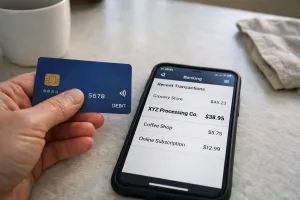


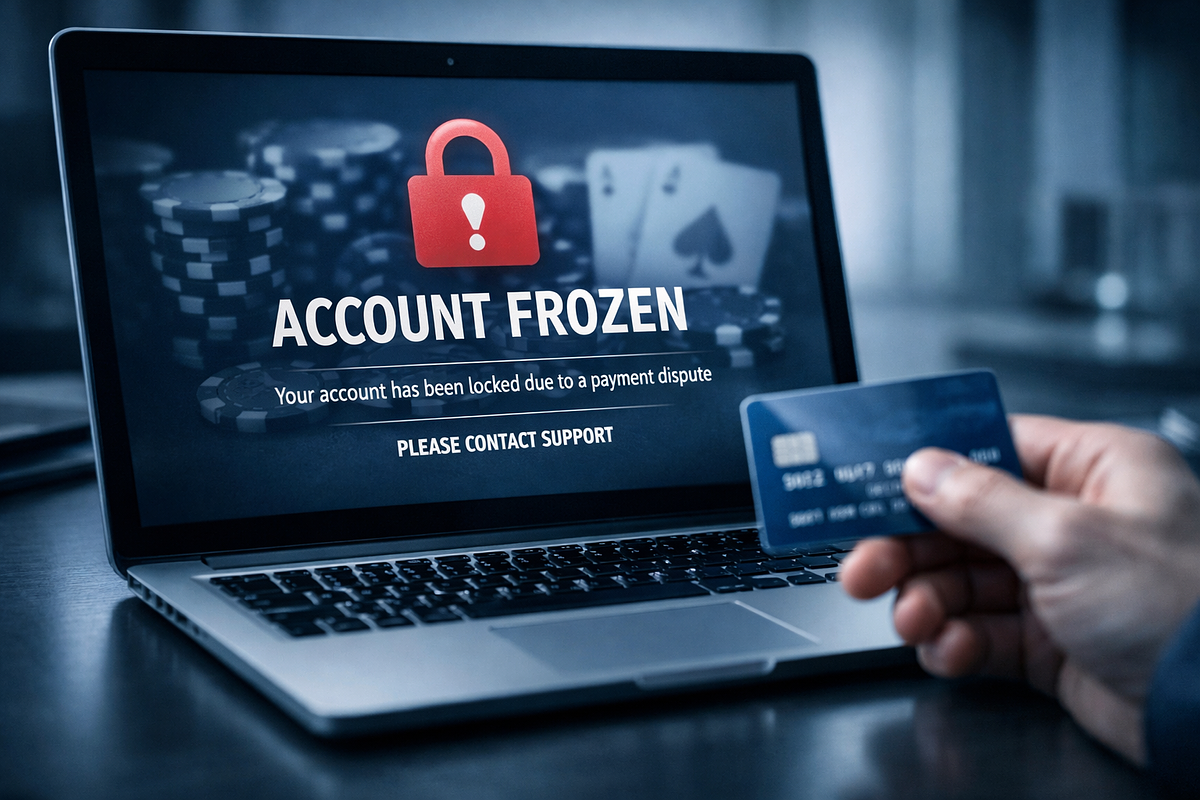
If you’re thinking about filing a chargeback on a gambling transaction, it’s worth understanding what actually happens before you do it, not after. When a player disputes a gambling charge, it doesn’t just trigger one process. It sets off several at once: the operator’s terms of service, card network rules, fraud detection systems, and sometimes licensing obligations. This article explains how each of those systems works, how they connect, and what the combined effect can be for the operator, your banking relationship, and your own account. By the end, you’ll have enough information to assess the real risks and make a smarter decision about how to handle a disputed gambling payment.
A gambling-related payment dispute doesn’t resolve as a simple transaction reversal. It activates contractual, licensing, fraud-detection, and card-network mechanisms at the same time, each operating on its own logic. This article covers what those mechanisms are, how they connect, and what consequences they produce for the operator, the banking relationship, and the player’s own financial record.
The Contractual Basis for Account Closure After a Chargeback
Every gambling operator’s terms of service include the right to close or freeze a player’s account when a payment dispute is filed against the platform. This isn’t a discretionary step reserved for repeat offenders. The chargeback itself is treated as a breach of the agreement the player accepted at registration, and account closure follows from that breach as a matter of contract. This is the first link in a wider consequence chain that extends into blacklisting, banking flags, and potential legal exposure.
When a dispute is filed, the operator’s internal systems register it as a breach event and trigger an account review. In most cases, that review results in closure or indefinite freezing. The closure compounds the problem: the player loses access to their own transaction history at the exact moment they need it most, because those records are the primary evidence available to contest banking flags or respond to fraud allegations that may come later. The sequence moves fast. From dispute filed, to account locked, to records inaccessible, all before the player has had any chance to gather documentation.
The immediate responses a dispute typically triggers include:
- Account suspension or closure: Access to the player account is terminated or frozen, effective immediately upon dispute registration.
- Transaction history lockout: The player’s deposit, withdrawal, and wagering records become inaccessible from the player-facing interface.
- Internal risk reclassification: The account is flagged as elevated-risk within the operator’s fraud management system.
- Evidence compilation: The operator begins assembling session logs, KYC records, device fingerprints, and gameplay data to contest the dispute at the card-network level.
- Fraud pattern review: The operator cross-references the account’s deposit, play, withdrawal, and dispute sequence against known friendly-fraud indicators.
When a dispute is filed against a gambling transaction, the operator sees one of two things: either the player is walking back a legitimate, completed wager, or the player’s payment credentials have been compromised and the account is a security liability. Both readings classify the account as elevated-risk, and both lead to the same response. Because either scenario poses an immediate operational or financial threat, account closure is the default action applied to all disputed accounts, not a graduated penalty reserved for players with a history of disputes.
Blacklisting Across Platforms Under a Shared License
A chargeback filed against one gambling account doesn’t stay contained to that platform. The flagged player identity spreads across operator networks that share a gaming license or a common fraud-prevention database, turning a single dispute into a lasting cross-platform record. This is why players who try to move to a partner brand after a dispute run into the same barriers they faced on the original platform.
Operators grouped under a common gaming license or corporate umbrella share flagged-player data internally. So a chargeback filed against one platform can result in the same identity being denied service on every partner platform under that shared license. Players who try to open a new account with a partner brand after a dispute often can’t complete identity verification or fund the new account. The flag travels with the identity, not with the specific account. The identifiers cross-referenced across a license group cover multiple layers of a player’s digital and financial footprint:
- Payment card fingerprint: the card number or tokenised equivalent used to fund the disputed account, matched against funding attempts on partner platforms
- Verified identity documents: government-issued ID data collected during KYC, which cannot be changed and persists across any new account registration
- Device signals: hardware identifiers, browser fingerprints, and IP address patterns that link a new account attempt to the flagged player’s prior sessions
- Account contact details: email addresses, phone numbers, and residential addresses submitted during registration, cross-checked against the shared flagged-player record
Blacklisting isn’t automatically reversed even if the underlying dispute is later resolved in the operator’s favour. Once a player identity has been catalogued as a chargeback risk, that record governs future account decisions. The risk classification is assigned at the point the dispute was filed, not based on the final outcome of the dispute. A resolved or withdrawn dispute doesn’t erase that classification, which means a favourable dispute outcome doesn’t restore platform access.
Friendly Fraud as the Dominant Chargeback Type in Gambling
Friendly fraud, in the gambling context, means disputing a legitimate deposit or losing bet by claiming the transaction was unauthorised, when in fact the player placed the wager knowingly and voluntarily. The dispute isn’t the result of a stolen card or a processing error. It’s a deliberate attempt to recover money lost through normal gameplay. Mastercard identifies first-party fraud of this kind as responsible for 75% of fraud experienced by online businesses. That concentration makes friendly fraud the defining chargeback problem for gambling operators, not an edge case within a broader mix of dispute types.
The mechanics follow a consistent sequence documented across gambling operators: a player funds an account, uses those funds to place bets, withdraws any winnings, and then disputes the original deposit as unauthorised. Executed in full, the sequence lets the player gamble at no net cost. Losses are recovered through the dispute while winnings are already withdrawn and beyond the operator’s reach. The four stages are distinct and sequential, which is why operators treat the pattern as a structured fraud method rather than an isolated complaint.
- Deposit: Player funds the gambling account using a credit or debit card.
- Wager: Player places bets using the deposited funds.
- Withdraw: Player withdraws any winnings before initiating a dispute.
- Dispute: Player files a chargeback on the original deposit, claiming the charge was unauthorised.
Operators identify friendly fraud by combining three categories of evidence: transaction-level sequencing that flags deposit-play-withdraw-dispute chains, account behaviour analytics that track session activity and betting history, and shared fraud-database lookups that surface players with prior dispute records across platforms. When those signals converge on a single account, the operator’s response escalates beyond account closure into a formal fraud investigation. Gambling disputes attract more scrutiny than disputes filed against retail merchants because operators hold granular activity records, including device fingerprints, IP logs, KYC verification data, and full session histories, that retail merchants typically don’t have. That makes a claim of “unauthorised transaction” substantially harder to sustain.
Banking Consequences Beyond the Gambling Account
The consequences of a gambling chargeback don’t stop at the operator’s platform. They extend into the cardholder’s own banking relationship, and where a dispute lacks valid grounds, they can reach into legal territory. This section traces that outward consequence chain, from the issuing bank’s internal risk systems to the legal exposure that attaches independently of how the card network resolves the underlying dispute.
Issuing banks monitor chargeback patterns on their own cardholders, and gambling-related disputes, particularly repeated ones, can result in the cardholder’s account being flagged for suspicious activity, restricted, or closed. The bank’s exposure is separate from the operator’s: a dispute the bank initially processed on the player’s behalf can still be recorded against the player’s internal risk profile. A cardholder who files a weak or repeated claim doesn’t simply walk away clean after the bank credits the disputed amount. Many banks also deny gambling disputes outright or flag them as ineligible based on merchant category codes, which means the cardholder may absorb both the financial loss and a negative internal record at the same time.
A chargeback filed without valid grounds, particularly one that matches the friendly-fraud pattern of depositing, playing, and then disputing the original deposit, can be characterised as fraud or breach of contract. Operators do, in documented cases, pursue recovery or referral for disputes they determine to be baseless. The legal risk exists independently of whether the operator succeeds in blocking the dispute at the card-network level. An operator that loses the network dispute can still pursue the player through civil or criminal channels, using the same transaction records that were submitted in the chargeback defence.
Card Network Thresholds and Merchant-Side Consequences
Operators don’t respond aggressively to payment disputes out of spite. Card networks impose enforceable dispute-ratio thresholds on every merchant they process, and the financial penalties for exceeding those thresholds are significant enough to make leniency toward disputed accounts an economically irrational choice. This network-level pressure explains why operators treat individual disputes as institutional threats rather than routine customer service events, and why the consequences for players are calibrated to that institutional risk rather than to the size of the transaction being disputed.
Major card networks set maximum acceptable dispute ratios for all merchants, and online gambling, classified under MCC 7995, sits in the high-risk category because dispute volumes in the sector are elevated relative to standard retail. Merchants who breach network thresholds face either termination of their merchant account or forced migration to high-risk payment processors, both of which carry materially worse commercial terms. Because maintaining a standard merchant account is a direct cost advantage, operators respond aggressively to individual disputes to protect their aggregate ratio. The table below contrasts the conditions that apply at each processing tier.
| Dimension | Standard Merchant Processing | High-Risk Merchant Processing |
|---|---|---|
| Processing fees | Lower, reflecting lower assumed dispute exposure | Higher, reflecting elevated sector dispute rates and greater processor risk |
| Dispute-ratio tolerance | Stricter absolute thresholds; Visa’s combined fraud and dispute ratio limit is 1.5% | Sector-specific tiers apply; gaming merchants face graduated penalty triggers at defined chargeback counts and ratio levels |
| Account termination risk | Lower under normal dispute volumes; termination is the primary consequence of sustained threshold breaches | Higher baseline risk; already operating under elevated scrutiny with less margin before penalties escalate |
| Payment service access | Broader access to mainstream acquiring banks and payment networks | Narrower access; restricted to processors that accept high-risk merchant categories, limiting competitive options |
Each individual dispute carries a direct per-case fee, and when dispute volumes are elevated across a platform, those fees add up to a real operating cost. Worldwide chargeback losses are projected to grow from $33.79 billion in 2025 to $41.69 billion by 2028, reflecting sustained upward pressure on merchants across all sectors. For gambling operators already classified as high-risk, this industry-wide growth in dispute costs compounds the network-threshold pressure described above. The result is that operators treat every dispute as a costly event requiring an account-level response, not as a routine customer service matter that can be absorbed and closed without consequence.
Account closure, blacklisting, and shared-database flagging aren’t punitive choices made in isolation. They’re operational responses calibrated to keep an operator’s aggregate dispute ratio below the thresholds that trigger network penalties. Because the financial consequence of a threshold breach is measured at the portfolio level, the operator’s response to any single dispute is priced against that network-level risk, not against the dollar value of the transaction being disputed. This is why player-facing consequences can look disproportionate to the amount involved. The operator isn’t responding to one transaction. It’s responding to what that transaction represents within a monitored ratio that determines its continued access to payment infrastructure.
How Payment Presentation Shapes Dispute Outcomes
The way a gambling transaction appears on a cardholder’s bank statement affects both the likelihood that a dispute gets filed and the strength of the operator’s position when one is. Operators using merchant category codes or descriptors that obscure the transaction’s nature create an information gap that can prompt a cardholder to dispute a charge as unrecognised. But that same operator typically holds detailed wagering records that make the dispute hard to sustain. The presentation of a charge and the evidence available to contest it are linked from the moment the transaction is processed.
Some gambling operators, particularly those operating offshore, have historically used merchant category codes or statement descriptors that don’t clearly identify the transaction as a gambling deposit. When a cardholder later disputes the charge on the basis that they don’t recognise it, the operator can respond with session logs, KYC verification records, device fingerprints, and wagering activity data that directly contradict the claim. Banks flag many gambling disputes as ineligible at the outset because the merchant category code or the terms accepted at account creation already establish the nature of the transaction. Disputes filed on an “unrecognised charge” basis tend to fail once the operator submits its counter-evidence, because the documentation trail establishes both what the charge was and that the cardholder participated in the activity it funded.
Reading a Payment Dispute for What It Actually Triggers
A gambling chargeback activates contractual, fraud-detection, banking, and card-network systems simultaneously. It’s not a single-channel transaction reversal. Because each of those systems responds according to its own logic and timeline, the consequences spread well beyond the original transaction and persist independently of how any one layer resolves. A player who understands this can accurately read a dispute as a decision with compounding, cross-system effects rather than a contained financial action.
Written by Arthur Crowson · Published August 10, 2026 · Last updated October 7, 2026
We check operator terms, licences and payment details against the casino's own pages and update this content when they change. Read our editorial policy, our transparency statement, or report an error. If gambling stops being fun, see our responsible gambling resources.