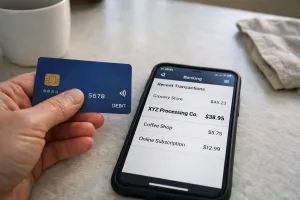



Online casinos require withdrawals to go back to the original payment method for regulatory reasons, not because it suits them. Licensed casinos operate under anti-money-laundering and fraud-prevention rules that dictate how funds must leave an account, and returning money to its source is a core part of that framework. This page explains the compliance logic behind the rule, why certain payment methods can’t receive returned funds, and what that means for how you manage deposits and withdrawals.
The Regulatory Foundation Behind the Original Payment Method Rule
When an online casino routes a withdrawal back to the deposit source, it’s not making a judgment call. It’s following an obligation set by the licensing authority that governs its operation. The operator’s licence comes with anti-financial-crime requirements, and the original payment method rule is one of the controls within that framework. Regulators treat the movement of funds into and out of a gambling account as a single connected transaction chain, not two separate events. That is why the rule applies across the board, regardless of how straightforward an individual player’s situation looks.
How Licensing Authorities Frame Deposit-Source Legitimacy
The UK Gambling Commission’s expectations on account withdrawals state explicitly that it considers it unfair practice for an operator to accept deposits from a payment source and only investigate that source’s legitimacy at the point of withdrawal. The Commission’s position is that if an operator has concerns about a payment method, for example a suspicion that it may be linked to a third-party source, those concerns should be addressed at or shortly after the point of deposit, not held until a withdrawal is requested. A documented case illustrates what the Commission considers a poor outcome: an operator accepted a £30 deposit, allowed the customer to win over £1,000, and then froze the account when the withdrawal was requested, on the basis that the original payment method may have been associated with a third party. The Commission’s published commentary on that case makes clear that the investigation should have happened before the deposit was accepted, not as a condition of releasing winnings. When a player sees a withdrawal held pending source verification, they’re seeing the downstream result of a check the regulator itself regards as having come too late.
Operator Obligations Under Anti-Money-Laundering Frameworks
Operators are required, under the anti-money-laundering frameworks attached to their licences, to build controls that stop gaming accounts from being used to move illicit funds. The UK Gambling Commission’s 2023 money laundering and terrorist financing risk assessment for the British gambling industry, published 30 November 2023, identifies the use of third parties or agents to obscure the source or ownership of money gambled as a high-risk factor in the sector. The mechanism that makes this risk concrete is straightforward: without a requirement to return funds to their entry point, money could enter a gambling account under one identity and exit under another, with the account acting as the transfer vehicle. Routing withdrawals back to the original deposit source closes that loop. The American Gaming Association’s 2022 AML Best Practices guide documents the same principle in the US context, specifying that wire transfer payouts should be directed to the account from which the originating funds were received. The rule exists to stop the account from being used as a laundering channel. It’s a structural control, not something aimed at legitimate players.
Identity Verification as the Second Compliance Layer
Anti-money laundering obligations and identity verification are separate regulatory requirements, but they work together as interlocking controls within the same compliance framework. Regulators require operators to confirm that the person requesting a withdrawal is the same verified individual who made the original deposits, not just that the funds themselves look clean. Returning withdrawals to the original payment method is one of the structural mechanisms that makes this confirmation enforceable, because it ties the payout path directly to the verified funding source on record. A confirmed identity, a confirmed deposit instrument, and a confirmed return route form a single continuous audit trail that regulators can examine end to end.
The KYC Requirement and Its Connection to Payout Routing
Know Your Customer (KYC) verification requires an operator to confirm, before processing a withdrawal, that the account holder is who they claim to be and that the funds in the account came from a source consistent with that identity. Published guidance from licensed operators in the US frames this obligation explicitly as protection against identity theft alongside money-laundering prevention, two distinct harms addressed by the same verification process. The original-method rule extends that verification chain into the payout stage: once an identity is confirmed and a funding source is verified, routing the withdrawal back to that same source closes the loop rather than opening a new, unverified exit point. When a player is asked to submit identity documents before their first withdrawal is processed, the operator is completing this chain, linking the verified person to the verified deposit instrument to the verified return path, rather than introducing an administrative delay. The UK Gambling Commission’s guidance confirms that operators may need to consult additional data sources to reach sufficient confidence in identity verification, which reflects how seriously regulators treat the completeness of that chain.
Why the Rule Prevents Third-Party Payment Fraud
The specific fraud pattern this rule is designed to stop involves a deposit made using a payment instrument that doesn’t belong to the account holder, followed by a withdrawal request directed to a different destination that the account holder does control. Without a return-to-source requirement, the account effectively works as a conversion mechanism: funds enter from an unauthorised instrument and exit to a new, clean destination, with the gambling transaction providing cover for the transfer. Returning funds only to the original deposit source neutralises this pattern, because if the deposit instrument was unauthorised or belonged to a third party, the money goes back to that instrument rather than being extracted elsewhere.
The American Gaming Association’s AML Best Practices guide, consistent across its 2017, 2019, and 2022 editions, states that a wire transfer should be made only to the patron’s account or, where applicable, to the account from which the originating wire was received. That principle encodes the same return-to-source logic in formal industry guidance. The same guide identifies as a suspicious-activity indicator a patron who deposits funds but does not play a substantial amount before requesting a withdrawal, and separately flags a patron who abruptly changes deposit or withdrawal methods. Both patterns are consistent with an attempt to use the account as a pass-through rather than for genuine gambling activity. The original-method rule is a structural anti-fraud control built into the payout architecture, not a customer-experience decision operators make at their discretion.
How the Rule Interacts With Specific Payment Method Categories
The original payment method rule applies across all deposit categories: funds must return to the source from which they came. In practice, the rule produces different outcomes depending on whether the payment instrument a player used to deposit can actually receive an inbound credit. Some categories handle both directions of fund movement natively, so the rule resolves without any extra steps. Others are designed solely to push funds outward and can’t accept a return credit, which means the rule can’t be satisfied through the original instrument alone and an alternative route has to be set up instead.
Payout Capability Across Common Deposit Categories
The determining factor across payment categories is not operator preference but the technical architecture of the instrument itself, specifically whether the payment network and account type behind it support inbound fund transfers from a third-party sender such as a gambling operator. The table below maps the three principal deposit-method groupings against their payout capability and the practical outcome each produces under the original-method rule.
| Payment Category | Accepts Deposits | Can Receive Payouts | Practical Outcome Under the Rule |
|---|---|---|---|
| Debit/credit cards and digital wallets (e-wallets) | Yes | Yes | Withdrawal is returned directly to the original instrument; no alternative route required |
| Prepaid cards | Yes | No | Player must nominate and verify an alternative payout method before withdrawal can be processed |
| Mobile payment solutions | Yes | No | Player must nominate and verify an alternative payout method before withdrawal can be processed |
Why Deposit-Only Methods Trigger Alternative Withdrawal Arrangements
Prepaid cards and mobile payment solutions are built to push funds outward only. They’re not designed to accept inbound credits from external senders. Because the original-method rule requires funds to return to their source, and the source instrument has no way to receive them, the rule can’t be satisfied through the original channel. Operators resolve this by requiring the player to nominate a separate, payout-capable method before the withdrawal is released.
That nominated method doesn’t bypass compliance obligations. It becomes subject to the same identity and source-of-funds checks that would apply to any payout route, consistent with the Consumer Financial Protection Bureau’s framework under Regulation E, which recognises that alternative arrangements must be provided where a prepaid instrument cannot itself serve as a payout destination. Using a deposit-only instrument shifts the compliance burden to a secondary verification step rather than removing it: the player must satisfy identity and source-of-funds requirements against the alternative method they nominate, not the original deposit instrument.
Additional Conditions Layered on Top of the Original Payment Method Rule
The original payment method rule is one gate in a sequence, not the only one. Withdrawals are also subject to account verification requirements and, where a bonus has been accepted, wagering conditions. Each operates according to its own regulatory or commercial logic. These are separate mechanisms with separate triggers and purposes, and they frequently apply at the same time. Treating them as one undifferentiated process makes it harder to identify which specific condition is holding up a given withdrawal.
Account Verification and Wagering Conditions as Parallel Gates
Account verification is an identity and address confirmation requirement that regulators impose before an operator processes a first withdrawal. It exists to satisfy anti-money laundering and age-verification obligations, not to determine where funds are sent. Wagering conditions are a commercial mechanism attached to bonuses: they require a player to stake bonus funds a specified number of times before those funds become withdrawable, and they have no connection to AML compliance or identity checks. Both conditions can be active at the same time as the original payment method rule, but each one resolves independently. Clearing one does not clear the others.
The list below is intended to help identify which gate is producing a specific withdrawal condition, rather than treating all three as a single opaque process.
- Account verification gate – Triggered when an operator requires confirmation of a player’s identity and address, typically before the first withdrawal is released, in order to satisfy regulatory obligations around age verification and anti-money laundering compliance.
- Wagering condition gate – Triggered when a player has accepted a bonus, requiring the associated playthrough requirement to be met before bonus-derived funds are converted into withdrawable balances.
- Original payment method gate – Activated once the two prior gates are cleared, routing the approved withdrawal amount back to the same payment instrument used to make the original deposit.
What a Withdrawal Restriction Tells You About the System Producing It
The original payment method rule is a structural compliance control, not an operator policy choice. A player who understands how identity verification, anti-money-laundering obligations, and third-party fraud prevention fit together can read a specific withdrawal condition as a signal from a defined category of control and identify which mechanism is producing it, rather than running into it as an arbitrary administrative barrier.
Written by Arthur Crowson · Published August 8, 2026 · Last updated October 7, 2026
We check operator terms, licences and payment details against the casino's own pages and update this content when they change. Read our editorial policy, our transparency statement, or report an error. If gambling stops being fun, see our responsible gambling resources.