

If you’ve looked at the responsible gambling tools on a platform and seen both a cooling-off period and self-exclusion listed, you might be wondering what separates them. Both involve stopping play, but they work in very different ways and carry very different levels of commitment. This page explains how each tool works, how binding it is, and what situations each one is built for, so you can pick the right one for your circumstances.
These are not two versions of the same thing. They sit at opposite ends of a spectrum, and treating them as interchangeable can lead you to pick a tool that doesn’t match your situation. This article covers how each one works, how binding each one is, and how to figure out which one fits a given concern.
Defining a Cooling-Off Period
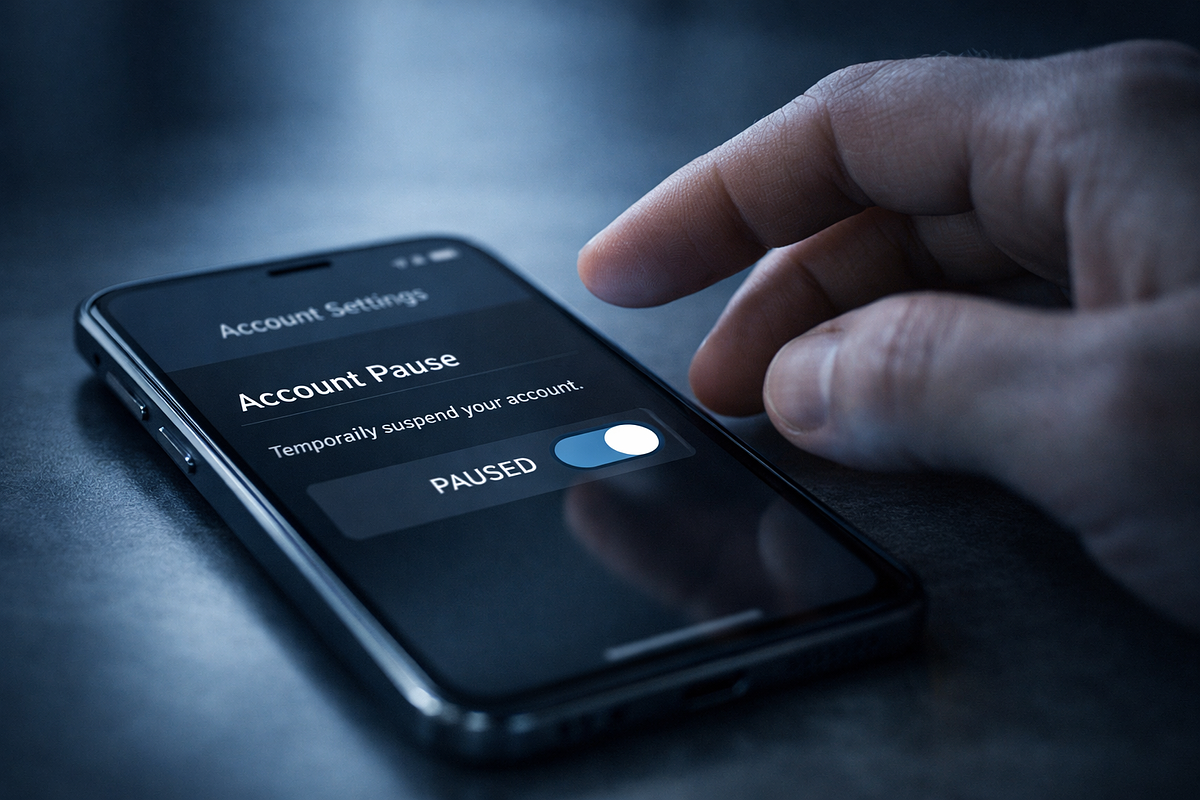
A cooling-off period is a short-term, player-initiated pause from gambling. It sits at the lighter end of the responsible gambling toolset. Think of it as a self-service brake: a way to interrupt your own momentum without entering a formal ban or making a long-term commitment.
Players who misjudge how serious this tool is tend to make one of two mistakes. They either overlook it when a brief pause is exactly what they need, or they use it when their situation calls for something more structured and binding.
Duration and Scope of a Cooling-Off Period
Cooling-off periods typically run from 24 hours to a few weeks. The exact options depend on what the operator makes available, and you pick from a set menu rather than entering a custom length.
The tool only blocks access to the specific account, platform, or app where you activate it. It does not carry over to other brands run by the same company, and it does not affect accounts you hold on other platforms. If you activate a cooling-off period on one site and assume it blocks you everywhere, you’ll find your other accounts are still open. That’s a common misreading of how this tool works, and it’s worth understanding before you decide whether a cooling-off period is enough for your situation.
Mandatory Play Breaks as a Related Mechanism
Mandatory play breaks are different from cooling-off periods in one important way: the operator or regulator triggers them, not the player. Research describes them as interruptions to long online sessions that prompt a brief time-out, giving players a moment to decide whether they want to keep going. Studies have tested break durations ranging from 90 seconds to 15 minutes to see how they affect subsequent gambling behaviour.
Both tools share the same basic purpose: introducing a pause in gambling activity. But the source of the trigger is different. If a session interruption appears on screen without you having requested it, that’s a mandatory play break, not a cooling-off period you chose. Knowing which category a break belongs to helps you understand what your platform is doing and why.
Defining Self-Exclusion
Self-exclusion is a formal, voluntary program where a person bans themselves from gambling venues or platforms for a fixed minimum term, measured in months to years, or in some programs, for life. It involves an administrative process, identity verification, and binding terms. It’s not simply a longer version of a cooling-off period. The terms are not reversible on demand, and signing up involves a formal agreement rather than flipping a toggle in your account settings.
Minimum Terms and Program Variants
Self-exclusion programs are built around fixed minimum durations. The shortest terms available across international programs are generally measured in months, not days or weeks. Terms shorter than six months are rare. In Quebec, 12-month enrollments accounted for 46 to 66% of participants in one studied program, making the one-year tier the most commonly chosen option. That pattern reflects how the tool is designed: for durable commitment, not short interruptions. Programs in the US and internationally offer structured tiers rather than open-ended durations, so you’re choosing among long-duration options only, not setting a length the way you might set a deposit limit.
- Short-tier minimum (6 months): The floor available in programs such as GamStop in the UK, where six months is the entry-level option. Terms below this are uncommon across international schemes.
- Mid-tier options (1 year, 3 years, 5 years): New Jersey offers one-year and five-year terms for online self-exclusion. New York structures its program around one-, three-, and five-year terms, with removal from the exclusion list at term end unless a new agreement is submitted.
- Long-tier and lifetime options: New Jersey includes a lifetime tier for in-person venue exclusion. GamStop offers a five-year term with automatic renewal, which by December 2025 had become the most popular long-term selection among new five-year registrants, with more than half choosing the auto-renewal version.
Enforcement Scope Across Venues and Platforms
Self-exclusion enforcement scope varies a lot by program, and the same label can cover tools with very different reach. Some programs cover a single operator or app. Others extend across all licensed venues within a jurisdiction. Multi-operator schemes go further still. GamStop, for example, blocks a registered person across every UK-licensed online operator, including new operators that join after registration, and requires those operators to stop sending marketing communications to the excluded individual. Singapore’s National Council on Problem Gambling operates under statutory authority that prohibits an excluded person from entering, remaining in, or gaming on any casino premises covered by the Casino Control Act. Enforcement in all cases relies on identity registration matched against the operator’s account systems or entry controls at physical venues. If you’re considering self-exclusion, you need to check the specific scope of the program available to you, because coverage that applies to one platform does not automatically extend to other operators or venues outside the scheme.
Key Differences Across Core Dimensions
The difference between cooling-off periods and self-exclusion becomes clear when you look at both tools across four dimensions: duration, reversibility, enforcement scope, and legal standing. Each one reveals a structural gap between the two tools, not just a difference in degree. You can also use this framework to evaluate any responsible gambling feature you come across on a new platform.
Duration and Reversibility Contrast
Duration and reversibility go hand in hand. Cooling-off periods are short by design and either expire automatically or can be ended by the player without any formal process. Self-exclusion agreements are long-term and, once the brief post-registration window closes, cannot be cancelled before the agreed term ends.
Some programs include a narrow cancellation window right after signup. Queensland’s scheme, for example, allows a 24-hour window during which a newly registered exclusion can be cancelled. Once that window closes, a cancellation request cannot be submitted until at least one year has passed. GamStop’s terms confirm a similar point: the exclusion cannot be reversed during the chosen minimum period, and when it expires, the block does not lift automatically. The registered person must contact the scheme to deactivate it.
Opting into self-exclusion is a decision that cannot easily be undone. That’s the point. Cooling-off periods offer short-term flexibility. Self-exclusion removes that flexibility by design.
Comparative View of Distinguishing Dimensions
Placing both tools side by side makes the gap between them easier to see. The table below maps each dimension to its corresponding characteristic for each tool, drawing on program structures documented across multiple jurisdictions.
| Dimension | Cooling-Off Period | Self-Exclusion |
|---|---|---|
| Typical duration | 24 hours to a few weeks | 6 months to lifetime |
| Reversibility | Self-reversible or expires automatically | Generally binding for the agreed term |
| Enforcement scope | Usually single account, platform, or app | Ranges from single operator to jurisdiction-wide or multi-operator scheme |
| Legal/regulatory standing | Operator-level responsible gambling feature | Formal program with regulatory backing in many jurisdictions |
| Reinstatement process | None required, access resumes at expiry | Typically requires active application and, in some programs, a waiting period or assessment |
Legal and Regulatory Standing
Self-exclusion carries formal regulatory weight in many jurisdictions. Singapore’s Casino Control Act 2006 gives the National Council on Problem Gambling the power to issue casino exclusion orders. A person under such an order is prohibited from entering, remaining on, or taking part in gaming on any casino premises. That statutory grounding means breaching a self-exclusion agreement is not simply a contractual matter between a player and an operator.
The consequences of breaching an exclusion can include removal from the premises, involvement of a regulator or law enforcement officer, forfeiture of winnings, and in some jurisdictions a trespass charge or fine. The specific consequences vary by jurisdiction and program structure.
Cooling-off periods carry no equivalent external enforcement. They are an operator-level feature, and a player who gets around one faces no regulatory or legal consequence beyond losing access to that particular account or platform for the duration of the pause. Self-exclusion is legally structured, not just a voluntary promise, which is why it comes with substantially more procedural weight than a short pause.
Reinstatement After Self-Exclusion Ends
In many programs, when a self-exclusion term expires, access is not automatically restored. The person has to take a deliberate step to re-engage with the operator or regulator before any access is granted. Some programs add further conditions on top of that. This is one of the clearest structural differences between self-exclusion and a cooling-off period. A cooling-off period simply expires and restores access without any action required from the player.
Common Reinstatement Requirements
These requirements exist to make sure re-entry into gambling is a considered decision rather than something that just happens passively when a term ends. The steps vary by program, but several patterns show up consistently across documented schemes.
- Active reapplication: The person must submit a fresh application or agreement to the operator or regulator rather than being automatically re-listed when the term expires. GamStop, for example, explicitly states it will not automatically remove a self-exclusion at the end of a minimum exclusion period.
- Post-term reflection window: Some programs impose a short additional waiting period after the term ends before access is restored, such as a 24-hour cooling-off period that must pass before re-entry is granted.
- Minimum enrollment period: Certain programs require that a minimum duration of the self-exclusion has been served before a removal request can even be submitted, preventing early exits shortly after enrollment.
- Assessment or treatment proof: In some jurisdictions, a person seeking reinstatement must provide evidence of completing a problem gambling assessment or an approved treatment programme before access is restored.
Matching the Right Tool to the Situation
How serious the concern is determines which tool fits. Cooling-off periods are built for mild, momentary concern: a player who wants to interrupt momentum without making a formal commitment. Self-exclusion is built for a more serious, sustained problem: a player who recognises a pattern they cannot manage on their own and wants a binding structural barrier. Reading the responsible gambling menu accurately means figuring out which of those two descriptions more closely matches your situation, not picking a tool based on convenience or familiarity.
Situational Indicators for Each Tool
A cooling-off period fits situations where a player wants to break the momentum of a session, step back briefly after a run of play, or create a short window to reassess without cutting off access entirely. The concern is present but short-term, and the player feels confident that a brief pause is proportionate to it. Self-exclusion fits situations where a player recognises a sustained pattern across multiple sessions or periods, feels unable to moderate their own behaviour without an external constraint, or wants to remove the option of gambling entirely for an extended stretch. The distinguishing factor is not the intensity of a single moment but whether the concern reflects something recurring that feels unmanageable without a formal, binding commitment. These are descriptions of the situations each tool was designed for, not recommendations about which one to choose.
Documented Limits of These Tools
Research has found that self-exclusion programs are under-used by problem gamblers relative to the population that could benefit from them. That means the tool exists at a smaller scale than the need it’s designed to address. Self-exclusion programs are also not completely effective at preventing gambling at excluded venues or on platforms that don’t participate in the relevant scheme. GamStop, for example, covers all UK-licensed online operators but explicitly does not block sites licensed outside the UK. A self-exclusion agreement creates friction and formal accountability, but it does not make gambling physically impossible. How well it works in practice depends on the geographic and operator reach of the specific program, and on the individual’s continued engagement with the terms they agreed to.
Reading Responsible Gambling Tools Accurately
The practical value of knowing the difference between these two tools is not just knowing their names. It’s understanding that they occupy categorically different positions on a severity spectrum: one built for flexibility, the other for binding structural constraint. A player who can place any responsible gambling feature they come across into the correct category, and understand what level of commitment that category represents, is in a much better position to use the responsible gambling menu as a functional instrument rather than an arbitrary set of options.
Written by Arthur Crowson · Published July 31, 2026 · Last updated October 7, 2026
We check operator terms, licences and payment details against the casino's own pages and update this content when they change. Read our editorial policy, our transparency statement, or report an error. If gambling stops being fun, see our responsible gambling resources.