

When a phone call or notification interrupts a casino game, what happens next isn’t always obvious. The outcome depends on where the game stood at the exact moment of interruption, whether it was a live dealer session, and what the transaction record shows. This page explains how to read those outcomes, verify them on your own, and understand the rules around phone use in physical casinos. By the end, you’ll know how to assess your situation and what steps, if any, to take.
Whether your bet is returned, a partial outcome is credited, or the round plays out without you comes down to whether the round completed, whether the game was live dealer, and what the transaction record shows. This article covers how to read those outcomes, verify them independently, and understand the legal context around phone use at physical casinos.
Bet Outcomes When a Round Does Not Complete
When a phone call, push notification, or connection loss interrupts a casino game mid-round, what happens to your wager depends on how far the round had progressed at that exact moment. Operators generally follow two policy paths. The first applies when the interruption happened before the game engine produced any result. The second applies when a result already existed for at least part of the round before the session cut off. Each path produces a different outcome in your account, and knowing which one applies explains any balance change you see after reconnecting.
Incomplete Rounds and Returned Wagers
A round counts as incomplete when the interruption happened before the game engine produced any result. The engine didn’t commit a final game state, and no outcome was generated that could be settled. Per operator policy documented by Delta Casino Alberta, when a bet was placed but the game didn’t complete, the wager is returned to the player’s account balance. That return isn’t a goodwill gesture. It’s a policy-driven reversal that reflects the fact that there was no valid game result to settle against.
If you see an unchanged or restored balance after an interruption, that means the round was voided, not that something went wrong. The following conditions typically trigger this outcome:
- No result produced: The game engine generated no outcome before the session ended.
- Round not resolved: The round was still open and unsettled at the moment of interruption.
- No final state recorded: No final game state was saved server-side that could be used as the basis for a settlement.
Partially Completed Rounds and Credited Winnings
A partially completed round is one where the game engine produced a result for the portion of play that happened before the interruption, even though the full round didn’t finish. Per operator policy documented by Delta Casino Alberta, any winnings earned up to the point of interruption are credited to the player’s account.
Some game formats make partial results possible. Multi-stage bonus rounds, sequential pick games, and held-reel mechanics can each reach a point where a calculable win exists for the stages already completed, regardless of what would have come next. When an interruption happens at that point, the engine has a recorded state to settle against, and the credit reflects that state rather than the full potential payout of a completed round.
If the credit is smaller than the payout you expected from a full round, that’s not an error. It reflects the partial game state the engine recorded when the session ended, and the settlement is calculated from that state alone.
Live Dealer Games and Continued Gameplay After Disconnection
Live dealer games work differently from software-driven slots or video poker. Each round runs on a physical table shared by multiple players in real time, so the game can’t pause or wait for one player who loses their connection. Two questions follow from that: what happens to the disconnected player’s wager, and what happens to the round itself.
The Wager Stands and the Round Continues Without the Player
Because a live dealer round is a shared real-time event, operator policy says the wager stands and the round continues without any further input from the disconnected player. The dealer completes the hand or spin on schedule for everyone else at the table. The disconnected player’s position is resolved based on whatever decisions were already recorded before the drop, plus any default behavior the game’s house rules assign to unmade decisions (such as standing on a blackjack hand rather than hitting). The disconnected player gives up any choices they would have made during the rest of the round, including hitting, standing, doubling down, or placing additional bets. This is different from what happens in a software-driven slot or video game, where an incomplete round typically results in the wager being returned. In a live dealer game, the round objectively completed at the table even if the player wasn’t there for part of it, so the bet isn’t voided just because of the disconnection.
Verifying Bet Status and Escalating to Support
After an interruption, there’s a clear self-service path to follow before you contact support. The transaction record is the authoritative account of what the operator’s system recorded for the affected round. What you saw on screen at the moment of disconnection doesn’t determine the outcome. The ledger does. If the ledger doesn’t answer your question, customer support is the right next step.
Reading the Transaction Record
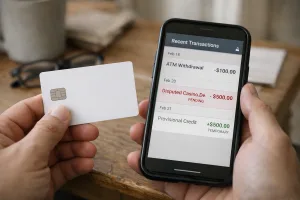
The transactions or account history page is your first stop after an interruption, per operator guidance. It shows whether a wager was returned, whether winnings were credited, and the timestamps for the round. The transaction ledger reflects the game engine’s final recorded state for that round, regardless of what the game interface showed when the connection dropped. Because the ledger and the interface can show different things during a disconnection, the ledger is the only record that determines what the operator processed.
When reviewing the transaction record for an interrupted round, look for these entries:
- Wager entry: confirms the bet was accepted and deducted before the interruption occurred
- Return entry: shows whether an unresolved wager was credited back to the account balance
- Winnings credit entry: shows whether any payout was applied, including partial outcomes from multi-stage game formats
- Timestamp of interruption: establishes the sequence of events and confirms which round the entries correspond to
When to Contact Customer Support
If the transaction record doesn’t show a return or a winnings credit that matches the round’s outcome, or if entries for the interrupted round are missing entirely, contact customer support. Support can access server-side round logs that you can’t see through the account interface. The reason to escalate is a real discrepancy between what the ledger shows and what the round’s recorded state should reflect, not just dissatisfaction with a correctly recorded outcome. Give support the game name, wager amount, and the date, time, and time zone of the interruption so they can find the relevant server log.
Reducing the Likelihood of Interruption-Related Issues
Operator help documentation lists a set of preventive steps that reduce both how often interruptions happen and how complicated they are to resolve when they do. These steps address the technical conditions that keep the game engine and the client app in sync. Following them doesn’t eliminate the possibility of an interruption, but it reduces the chances that the engine’s disconnection-handling policies get triggered.
Connection and Application Hygiene
The preventive steps in operator documentation focus on three things: connection stability, keeping the app or browser up to date, and avoiding manual actions like refreshing or closing the game while a round is active. An unstable connection or an outdated client increases the chance that the game engine and the client fall out of sync, which is exactly what triggers disconnection-outcome policies. A mid-round refresh isn’t a neutral action. Operator documentation says the game engine may treat it the same as a dropped connection, meaning the same outcome rules apply to a deliberate page reload as to an involuntary one.
The following steps are documented in operator help materials as the standard things players can do before and during a session:
- Stable internet connection: A consistent, low-dropout connection reduces the chance that the client loses contact with the game server mid-round.
- Updated app or browser: Running a current version of the app or browser reduces the risk of client-side rendering failures that can desynchronize the client from the server-side game state.
- No mid-round refresh or close: Manually refreshing the page or closing the game while a round is in progress may be treated by the engine as a disconnection, triggering the same outcome handling as an involuntary connection loss.
Phone Use Restrictions at Physical Casinos and Device-Advantage Law
When a phone interrupts a casino session inside a physical casino, the legal picture is different from what applies online. Online platforms handle interruptions through server-side policy. Physical casinos operate under laws that govern what a phone can be used for during active play. Three points define this legal dimension: the statute that sets the boundary, how enforcement has evolved in practice, and the line between permitted and prohibited phone use.
The Statutory Framework Governing Device-Assisted Play
Nevada Revised Statutes section 465.075, titled “Use or possession of device, software or hardware to obtain advantage at playing game prohibited,” makes it unlawful to use or possess any device, software, or hardware to gain an advantage at a game in a licensed gaming establishment. The statute covers software and hardware as well as physical devices, so a phone app used to analyze strategy at a table game or slot machine falls within its reach. The legal risk under this statute isn’t tied to the phone itself. It’s tied to what the phone is being used for at the moment of play, and that distinction determines whether a player carrying a phone onto a casino floor is acting lawfully or not.
Enforcement Practice and the Permitted-Versus-Prohibited Line
Historically, physical casino dealers have flagged players who reach for their phones at table games, out of concern about device-assisted advantage play. Enforcement of blanket phone restrictions has relaxed at many properties over time, shifting the practical standard away from the phone’s presence and toward what the phone is actually doing during a game.
The operative distinction is behavioral. Taking a call or speaking with someone while seated at a table is generally permitted. Running an app that analyzes game strategy at that same table is a statutory violation. The table below maps each category to its standing and the basis for that standing.
| Phone Use Category | Permitted or Prohibited | Basis |
|---|---|---|
| Speaking with someone by phone during play | Permitted | General casino practice; not covered by the device-advantage statute, which targets use of a device to obtain a playing advantage |
| Using a phone application to analyze game strategy at a machine or table | Prohibited | Nevada Revised Statutes section 465.075, use of software or hardware to obtain an advantage at a licensed gaming establishment |
Written by Arthur Crowson · Published August 28, 2026 · Last updated October 7, 2026
We check operator terms, licences and payment details against the casino's own pages and update this content when they change. Read our editorial policy, our transparency statement, or report an error. If gambling stops being fun, see our responsible gambling resources.