

When you use a credit card at a Canadian online casino, the casino doesn’t control what you get charged. Your card issuer does. The issuer decides how to classify the transaction, and that classification determines whether you pay a cash advance fee, a higher interest rate, or both, often starting the same day the deposit posts. A casino’s cashier page might say there’s no deposit fee, but your credit card statement can tell a different story. This page explains how Canadian banks typically classify these transactions, how that compares to using a debit card or Interac e-Transfer, and what withdrawal options look like at Canadian operators. By the end, you’ll have enough information to decide whether a credit card makes sense as your deposit method.
How Canadian Banks Classify Online Casino Credit Card Deposits
When you use a credit card to fund an online casino account, the fees and interest you pay are set entirely by your card issuer, not the casino. The issuer assigns a transaction category to the deposit the moment it posts, and that category controls every cost that follows. The casino has no say in this, and you can’t negotiate it away. Understanding how that classification works is the starting point for reading any credit card statement that includes a casino deposit.
Canadian card issuers commonly classify online casino deposits as cash advances rather than purchases. A purchase classification gives you an interest-free grace period, typically at least 21 days, where no interest builds up if you pay the balance in full by the due date. A cash advance classification removes that grace period. Interest starts accruing the day the deposit posts, with no window to pay it off before charges begin.
The interest rate on a cash advance is also higher than the standard purchase rate. Where a typical Canadian card charges around 19.99% on purchases, the cash advance rate on the same card is usually several percentage points higher. On top of that, a flat transaction fee applies the moment the deposit is made. For most Canadian credit cards, this fee falls between C$5 and C$10 per transaction, or 2% to 3% of the advance amount, whichever is greater. So on a larger deposit, the fee scales up with the amount.
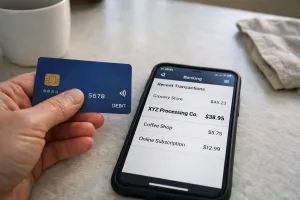
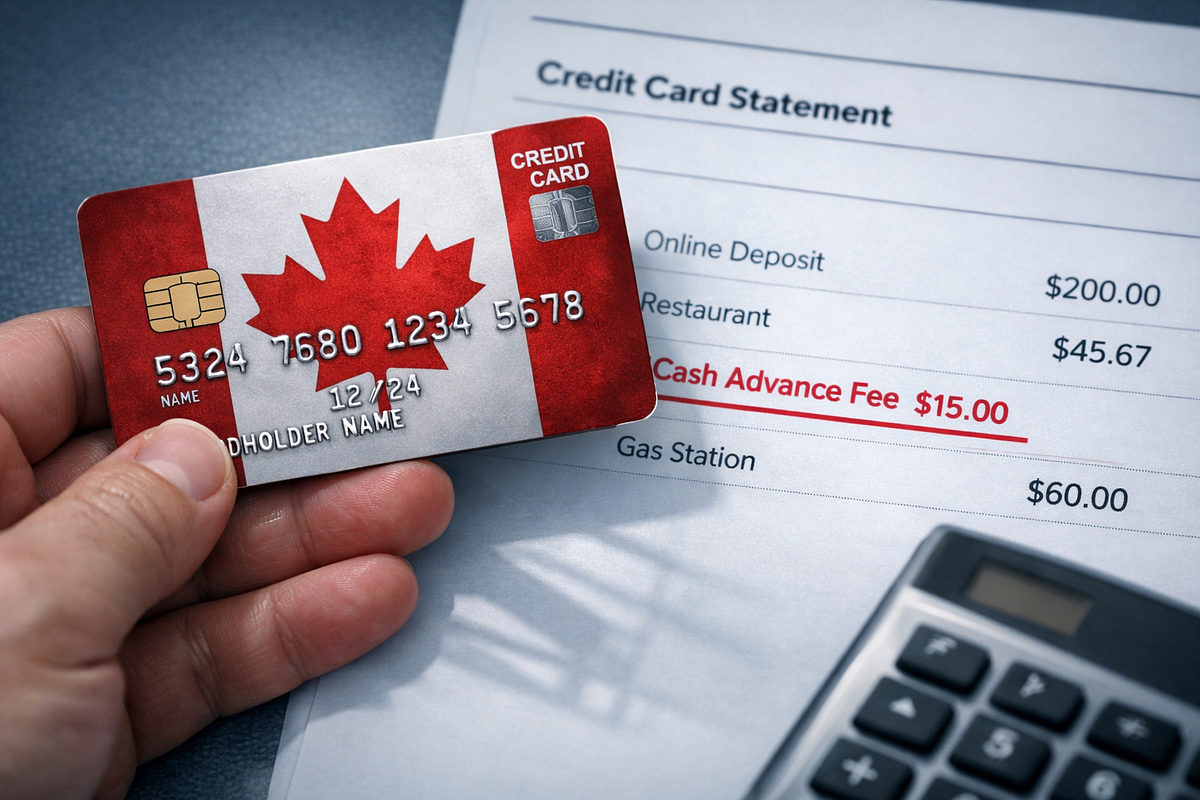
When you look at a statement that includes a casino deposit classified as a cash advance, you’ll see three things: the flat fee posted on the same day as the deposit, a cash advance balance tracked separately from your purchase balance, and interest charges that started building immediately rather than after the billing cycle closed. Those three line items are connected outcomes of the cash advance classification.
Casino cashier pages often say credit card deposits carry no deposit fee, and that’s accurate from the casino’s side. The casino doesn’t add a charge to the transaction. It receives the deposited amount and passes no fee back to you through its own system.
The cash advance fee and the immediate interest charge come entirely from your card issuer. They show up on your credit card statement, not on any casino receipt or transaction history. The two sides of the transaction are separate: the casino records a deposit with no fee, while the issuer records a cash advance with a flat fee and interest accruing from day one.
When a casino cashier page says deposits are free, that only describes the casino’s side of the transaction. It says nothing about what your card issuer posts to your account. Reading “no deposit fee” as the full cost of a credit card deposit means you’re undercounting what you actually paid.
Issuer-Level Variation in Approval, Blocking, and Classification Behaviour
Canadian card issuers don’t all handle gambling deposits the same way. Some approve them routinely and classify them as cash advances. Some run them through extra fraud review before settling. Some decline them outright. The classification decision, and therefore the fee outcome, is set by the issuer, not the casino. If you see a “transaction declined” message at a casino deposit screen, that doesn’t necessarily mean something is wrong with the casino or your account. It may be an issuer-level block that applies no matter where you try to deposit. Knowing how your specific card behaves before you try to fund an account removes the guesswork from that message.
Cards with the same network logo don’t behave the same way at a casino cashier, because the issuing bank sets the approval and classification policy, not the network. A Visa card from one Canadian bank might process a casino deposit without any friction, while a Visa from a different issuer might decline the same transaction or put it on hold. The table below maps the major networks and named issuer categories against the factors most relevant to a Canadian player weighing their options.
| Card Network / Issuer Category | Typical Acceptance at Canadian Online Casinos | Cash Advance Treatment | Notable Behaviour |
|---|---|---|---|
| Visa | Widely accepted across Canadian online casino operators | Commonly classified as a cash advance by issuing banks | Acceptance and classification vary by the specific issuing bank, not the network itself |
| Mastercard | Widely accepted across Canadian online casino operators | Commonly classified as a cash advance by issuing banks | Issuer-level policies differ; approval is not guaranteed across all Mastercard-issuing banks |
| American Express | Accepted at some Canadian online casino sites, not universally | Classification follows issuer policy where accepted | Narrower operator acceptance limits its practical use as a deposit method |
| Scotiabank Visa / MBNA | Generally accepted where Visa is supported | Almost always treated as a cash advance | These issuers are specifically identified as applying cash advance classification to casino deposits with high consistency |
| Capital One | Low; gambling transactions are rarely permitted | Not applicable in most cases due to transaction blocking | Identified as an issuer that rarely permits gambling transactions to proceed |
Canadian issuers run automated fraud monitoring that checks each transaction against behavioural and identity signals before approving it. A casino deposit can trigger a flag or an outright decline when transaction velocity is unusually high, for example, multiple deposits submitted in quick succession, because that pattern resembles the layering behaviour associated with financial crime.
A second trigger is a mismatch between the card’s registered details and the player account details at the casino. FINTRAC’s February 2024 Special Bulletin on online gambling identifies a discrepancy between a funding method’s registered name and the player’s registration details as a suspicious activity indicator. Issuers whose systems are calibrated to these signals will decline or hold a transaction where the cardholder name on file doesn’t match the name on the casino account.
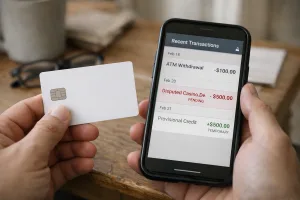
Neither of these triggers is visible to you at the moment of decline. If you see a generic decline message and assume the casino rejected your deposit, you may actually be looking at an issuer-side fraud hold that will clear once the issuer’s system re-evaluates the transaction, or once you call your bank directly. There are two distinct sources of a decline: issuer policy and fraud monitoring. Knowing which one you’re dealing with tells you who to contact to fix it.
Card Withdrawals from Canadian Online Casinos
Depositing by credit card doesn’t guarantee you can withdraw winnings back to the same card. Withdrawal support varies by operator, and the method a casino uses to pay out is set independently of how you funded your account. Check the cashier’s withdrawal panel before you commit to a funding method, because the payout route affects both timing and any fees that may apply on the receiving end.
Canadian online casino operators fall into a few categories when it comes to card withdrawals. Some don’t support credit card withdrawals at all, regardless of how you deposited. Others support card payouts only through debit cards rather than credit cards, meaning you’ll need a separate debit card on file to receive funds even if you deposited by credit card. A third category routes all withdrawals through domestic transfer rails by default, with no card payout option at the cashier stage.
Interac e-Transfer is the fallback payout method most Canadian players will encounter across these operator categories. Where a casino’s cashier page lists withdrawal methods, a “debit card” entry doesn’t mean credit card withdrawals are also available. Most operators treat these as separate methods. Read the withdrawal methods panel carefully and look for whether the entry says credit card, debit card, or e-Transfer, so you know exactly which options are open to you before you deposit.
Card withdrawals at Canadian online casinos take longer than domestic transfer payouts. If you need faster access to your winnings, the default domestic rail is generally quicker than waiting on card processing.
- Minimum deposit range: C$10 to C$20
- Monthly withdrawal limit range: C$500 to C$10,000
- Card withdrawal processing time: 2 to 5 business days
- Comparative timing versus Interac e-Transfer: Interac e-Transfer withdrawals are faster than credit card withdrawals at Canadian online casinos
Credit Cards Compared Against Debit Cards and Domestic Transfer Rails
For most Canadian players, the practical funding decision comes down to three options: credit cards, debit cards, and Interac e-Transfer. Each one has a different fee structure, decline risk, withdrawal timeline, and level of financial privacy. The right choice depends on which of those factors matters most to you.
The table below puts the three funding options side by side across the factors that most directly affect your experience at the cashier, from deposit through withdrawal. Each row reflects the structural characteristics of the method rather than any single operator’s setup.
| Funding Method | Typical Fee Origin | Decline / Block Risk | Withdrawal Speed | Privacy / Data Exposure | Cash Advance Classification |
|---|---|---|---|---|---|
| Credit card (Visa / Mastercard) | Card issuer: cash advance fee plus immediate interest accrual at a rate above the standard purchase APR; casino charges no deposit fee | Moderate to high; varies by issuer. Some approve routinely, some flag for fraud review, some decline outright | 2 to 5 business days where supported; not all operators offer credit card withdrawals | Full card and cardholder details transmitted; mismatch between card name and player registration is a FINTRAC-identified suspicious activity indicator | Yes, at most Canadian issuers |
| Debit card / Visa Debit | Draws from existing funds; no cash advance fee and no cash advance interest rate applies | Low; transactions draw directly from a bank account balance and aren’t subject to issuer gambling-block policies in the same way | Supported for withdrawals at some operators (e.g., Caesars Ontario lists debit card as a withdrawal method); speed varies by operator | Bank account details transmitted; no borrowed-funds exposure | No |
| Interac e-Transfer | Minimal to none at the player level; fees, if any, are set by the player’s financial institution and are typically low | Low; operates on domestic bank-to-bank rails without the issuer-level gambling-block risk present on credit cards | Faster than credit card processing for withdrawals; the default payout method at many Canadian online casino operators | Email address and bank account details used; no card number transmitted; no chargeback mechanism available | No |
Interac e-Transfer recorded 1.4 billion transactions in 2024, a 17% year-on-year increase, within a broader payments picture where digital payments accounted for 86% of total payment volume in Canada that year, according to Payments Canada’s 2025 Canadian Payment Methods and Trends report. That volume reflects a domestic payment method deeply embedded in how Canadians move money between accounts and to third parties, including online platforms. Canadian online casino operators have built their cashier withdrawal options around this reality. Interac e-Transfer processes faster than credit card settlements and doesn’t carry the issuer-level friction, such as fraud flags, gambling blocks, and mismatched-detail declines, that credit card withdrawals can run into. When you see Interac e-Transfer listed as the primary or fastest withdrawal option at a casino, that’s a direct result of how dominant it is in Canadian payments, not an arbitrary operator choice.
Regulatory Context and the Ongoing Debate Over Credit Card Gambling in Canada
The fee and classification mechanics covered earlier in this article don’t exist in a fixed policy environment. Provincial and federal positions on credit card gambling in Canada diverge, and the regulatory picture is moving in a direction that other comparable markets have already reached. Knowing where that trajectory points helps you read cashier-page changes at Canadian operators as policy outcomes rather than arbitrary business decisions.
Manitoba’s online gambling environment is governed by the Liquor, Gaming and Cannabis Authority of Manitoba, which sets the framework for provincially sanctioned online gambling in that province. At the national level, a Globe and Mail piece published on 2 July 2024 called on Canadian provincial regulators to follow Australia’s lead and ban credit cards as a funding method for online gambling. Australia’s credit card ban for online wagering, administered by the Australian Communications and Media Authority, came into force on 11 June 2024, extending to online and telephone wagering operators a restriction that had already applied to land-based venues. The UK Gambling Commission took a comparable step earlier, announcing in January 2020 that credit card gambling would be banned across Great Britain from April of that year. The fact that published commentary is explicitly modelling a Canadian ban on these two jurisdictions signals that the policy conversation in Canada has moved beyond abstract discussion. When a Canadian operator removes credit cards from its accepted deposit methods, that change is more accurately read as a response to a regulatory direction already visible in the public record than as a unilateral cashier update.
A GREO rapid evidence review titled “The Role of Credit Cards in Gambling,” published in April 2020, provides concrete numbers on how credit card gambling behaves in a regulated market. The review examined UK gambling deposit data and found that credit cards represented a small share of total online gambling deposits compared with debit cards, and that the pattern of use was characterised by high transaction frequency at low individual amounts. Specifically, 92% of individual credit card gambling deposits fell between £1 and £100. Despite that small-transaction pattern, the aggregate cost was significant: the 165,225 active credit card gambling customers in the review’s sample accrued more than £2.5 million in transaction fees alone during a single month, February 2019. These figures don’t describe Canadian behaviour directly, but they show how frequent small deposits, each attracting a separate fee, can add up to a significant total cost. That same mechanism applies to cash advance fees on Canadian credit cards.
Responsible Gambling Considerations Specific to Credit Card Funding
The mechanics covered earlier in this article, specifically immediate interest accrual from the transaction date, a flat cash advance fee applied per deposit, and low minimum deposit thresholds that make small repeat transactions easy, combine to create a risk profile that’s structurally different from funding with a debit card or Interac e-Transfer. When the funding source is a credit line rather than existing funds, each session draws on borrowed money, and the cost of that borrowing builds up independently of whether you win or lose. That distinction puts credit card gambling in a separate category of financial exposure, not simply a more expensive version of the same activity.
Each credit card deposit at a Canadian online casino triggers a cash advance fee and starts accruing interest the day the transaction posts, with no grace period. Because minimum deposit thresholds at Canadian operators typically sit at C$10 to C$20, the natural pattern that emerges is multiple small deposits across a billing cycle rather than a single large one. The GREO evidence review on credit cards and gambling found that the overwhelming majority of individual credit card gambling deposits in the UK fell in a low-denomination range, consistent with this small-transaction pattern. Under cash advance terms, each of those individual transactions carries its own flat fee and its own interest start date. When you look at your monthly statement, the total cost of a month’s gambling activity won’t appear as a single line item. It will show up as an accumulation of per-transaction fees plus interest calculated from multiple separate start dates. Reading that statement accurately means understanding that the interest shown doesn’t reflect a single borrowing event. It reflects the compounded effect of each deposit treated as a separate cash advance from the moment it posted.
Canadian online casino operators are typically required to offer players a set of self-directed tools that let you place controls on your own account activity. These tools operate at the operator level, meaning they apply to activity on that specific platform and are set by you, not your card issuer.
- Deposit limit: A cap you set on the total amount that can be deposited within a defined time period, daily, weekly, or monthly, regardless of the funding method used.
- Self-exclusion: A player-initiated block on your own access to the operator’s platform, applied for a defined duration or on an indefinite basis, preventing further deposits and play during the exclusion period.
- Additional operator-side controls: Canadian operators may offer further account-level tools such as session time limits, reality checks, or wagering limits. The specific options available vary by operator and provincial regulatory framework.
Written by Arthur Crowson · Published August 8, 2026 · Last updated October 7, 2026
We check operator terms, licences and payment details against the casino's own pages and update this content when they change. Read our editorial policy, our transparency statement, or report an error. If gambling stops being fun, see our responsible gambling resources.