

On August 27, 2021, Bill C-218 removed the Criminal Code ban on single-event sports wagering, changing how legal sports betting works in Canada. This article covers what C-218 changed, how parlay and single-event betting now run side by side under provincial oversight, and why Ontario’s open private-operator market looks so different from the lottery-monopoly model still used in most other provinces. By the end, you’ll have a clear picture of your options as a bettor and how the rules vary depending on where you live.
The Parlay-Only Restriction That Defined Canadian Sports Betting Before 2021
Before August 2021, the only legal way to bet on sports through Canadian provincial channels was the parlay format. This wasn’t a choice made by provincial lottery corporations. It was federal law. Paragraph 207(4)(b) of the Criminal Code banned betting on a single sport event or athletic contest, so any legal wager had to cover multiple events. The parlay-only structure was a legal requirement, not a product preference. That distinction matters if you’re trying to make sense of old provincial product names or pre-2021 Canadian betting coverage.
How the Parlay Requirement Worked in Practice
Every legal sports bet placed through a provincial lottery product required correct picks on two or more separate events. If you get one leg wrong, the whole ticket is lost. There was no partial payout for getting some picks right.
That structure had a real mathematical cost. The house edge on a parlay compounds across each leg, so the effective margin on a legal Canadian provincial product was much higher than on a single-event wager at an offshore operator offering the same odds on the same games. A bettor placing a two-leg parlay through a provincial product was not getting the same value as someone placing two independent single-game bets offshore. The mandatory combination format increased the operator‘s margin.
Understanding how to read sports betting odds in Canada helps illustrate exactly why this pricing gap mattered so much to bettors comparing provincial products against offshore alternatives.
The Market Disparity That Defined Pre-2021 Canadian Sports Betting
That pricing gap explains a market disparity that defined the pre-2021 period: provincial parlay products brought in about CAD $500 million in annual revenue nationally, while an estimated CAD $14 billion in annual Canadian sports wagers went to offshore operators.
That 28-to-1 ratio between offshore and domestic legal volume isn’t mainly a story about bettors preferring offshore brands. It reflects how uncompetitive a product format becomes when it’s imposed by statute. Any claim about the “size” of the Canadian sports betting market based on pre-2021 provincial revenue figures captures only the legally restricted domestic slice, not the full scale of Canadian wagering activity.
What Bill C-218 Actually Changed in the Criminal Code
Bill C-218, the Safe and Regulated Sports Betting Act, was a private member’s bill that changed paragraph 207(4)(b) of the Criminal Code by removing the ban on wagering on a single sport event or athletic contest. The amendment made it legal for a provincial government, or a person licensed by the Lieutenant Governor in Council of that province, to run a lottery scheme involving single-event wagers. It came into force on August 27, 2021. It did not create a federal sports betting regulator or require any specific product structure from the provinces.
The Legislative Path and What It Did Not Touch
The bill was introduced on February 25, 2020, passed third reading in the House of Commons on April 22, 2021, cleared the Senate on June 22, 2021, and came into force on August 27, 2021. That short gap between Royal Assent and proclamation explains why provincial single-event products launched within a narrow window in late summer 2021. Operators had limited time to build and certify platforms before the statutory permission took effect.
The amendment did not touch pari-mutuel wagering on horse racing, which stayed under the exclusive jurisdiction of the Canadian Pari-Mutuel Agency (CPMA). The CPMA’s authority comes from section 204 of the Criminal Code, applied through the Pari-Mutuel Betting Supervision Regulations (SOR/91-365). Canadian horse racing wagering continues to operate under a separate regulatory framework from fixed-odds sports betting.
Anyone reading Canadian gambling market data should not combine pari-mutuel horse racing figures with fixed-odds sports betting figures. The two operate under distinct statutory and regulatory rules.
Why the Amendment Passed When It Did
Two factors are consistently cited in academic and legal sources as driving C-218’s passage:
- An estimated CAD $14 billion in annual Canadian wagers was going to offshore gray-market operators, representing revenue that provincial and federal governments couldn’t capture.
- The 2018 US Supreme Court decision in Murphy v. National Collegiate Athletic Association struck down the federal ban on state-level sports betting in the United States, reshaping the North American competitive picture and creating political pressure in Canada to bring wagering activity back before the cross-border gap grew wider.
- A PricewaterhouseCoopers projection estimated that a legalized single-event framework could grow the Canadian sports betting market to about CAD $2.4 billion in gross gaming revenue within two years of legalization, positioning C-218 as a revenue-recapture measure rather than a consumer-choice reform and explaining why the authority to act was handed to the provinces rather than a new federal regulator.
How Parlay and Single-Event Betting Now Coexist Under Provincial Regulation
C-218 added single-event wagering to the legal product set. It did not remove or replace parlay betting. Both formats are now offered through provincial channels at the same time. The constitutional division of powers means the federal amendment functioned only as a permission. It removed a Criminal Code prohibition.
The actual running of sports wagering remains a provincial responsibility, handled through each province’s lottery corporation or, in one province, through a competitive licensing framework covered in the next section.
Where Parlay Products Sit in the Post-Amendment Product Mix
Provincial lottery corporations kept their legacy parlay lottery products after August 2021 and added single-event fixed-odds wagering as a parallel option, mostly through digital platforms. These parlay products run under established brand names: Pro-Line in Ontario and Atlantic Canada, Sport Select in British Columbia, and Mise-O-Jeu in Québec. Each of these products kept running without interruption after C-218 came into force.
The mechanical difference between the two product types is what matters. A lottery-style parlay product prices each leg on a fixed schedule and pays out according to a fixed payout table set in advance. A single-event fixed-odds wager reflects real-time market pricing, with odds that move in response to betting volume and new information before the event starts.
When a Canadian betting product is marketed as a “sports lottery,” it runs on the fixed-schedule pricing model. When it’s marketed as a “sportsbook,” it runs on real-time market pricing. That pricing-mechanism difference, not the branding, is what separates the two product experiences.
How Single-Event Legalization Enabled In-Play Wagering
Legalizing wagers on a single sport event did more than open up pre-match single-game betting. It also unlocked in-play (in-game) wagering, where each bet placed during a live contest is a single-event wager on a specific outcome within that contest.
This product type was incompatible with the old parlay-only regime. In-play bets are placed on outcomes that emerge in real time and can’t be pre-combined into a mandatory multi-leg ticket.
The rapid growth of smartphone-delivered in-play wagering in Canada since late 2021 is a direct result of the amendment’s statutory language. In-play product availability is the clearest visible sign of the post-C-218 era. Its presence confirms that an operator is offering a product category that was impossible under the prior Criminal Code framework.
The Two Provincial Models: Lottery Monopoly vs. Competitive Private Market
Because C-218 handed conduct and management of sports wagering to the provinces, each province chose its own delivery method. Every province except Ontario routed single-event betting through its existing provincial lottery corporation, keeping a Crown monopoly on legal sports wagering.
Ontario split its market: it kept the provincial lottery corporation as a legal operator while also opening a competitive commercial market to private operators under a separate regulatory authority.
The Lottery-Monopoly Model Used by Most Provinces
Under the default Canadian model, the provincial lottery corporation is the only legal operator of sports wagering in that province. Each corporation offers both legacy parlay products and post-2021 single-event wagering through its own branded digital platform:
- In British Columbia, the British Columbia Lottery Corporation (BCLC) launched single-event betting on August 27, 2021, through its PlayNow.com platform.
- In Québec, Loto-Québec runs sports wagering through its Mise-O-Jeu product line.
- In Atlantic Canada, the Atlantic Lottery Corporation (ALC) serves the four Atlantic provinces.
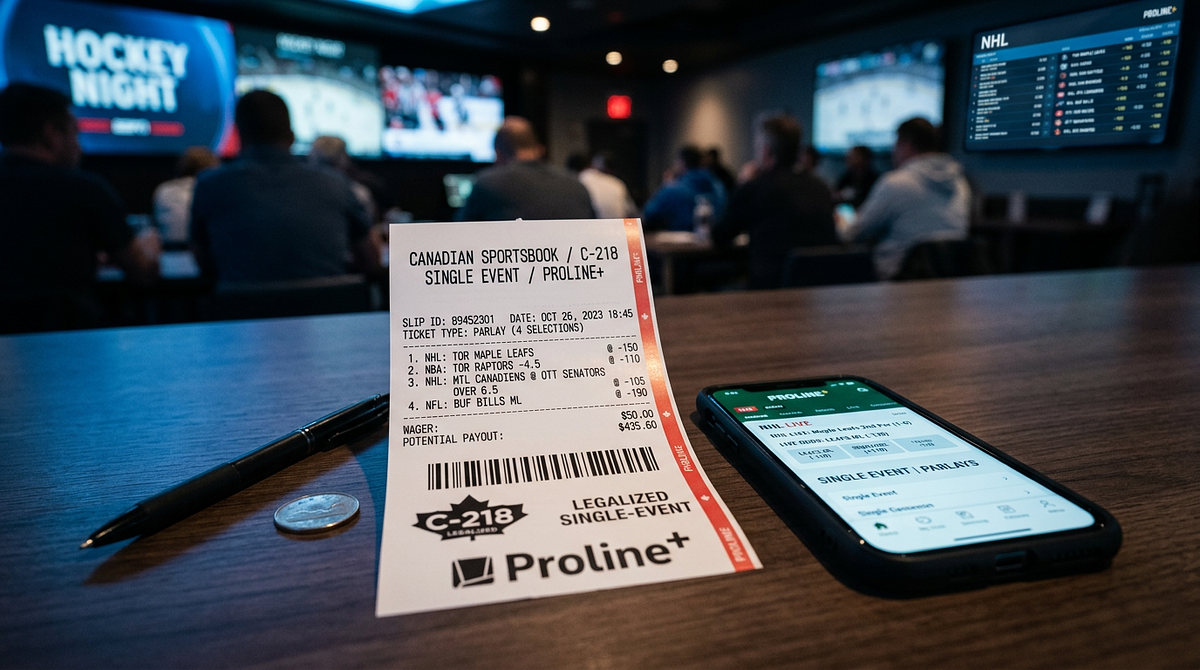
- In Ontario, the Ontario Lottery and Gaming Corporation (OLG) launched single-event betting on August 27, 2021, through its PROLINE+ platform, though Ontario later opened a parallel private market.
- In lottery-monopoly provinces, there is one legal domestic sportsbook operator per province. Any other brand accepting wagers from residents of those provinces is operating in the gray market.
The Ontario Competitive Private-Operator Model
Ontario kept OLG as a legal sports wagering operator and also built a separate commercial licensing framework for private operators. The entity responsible for running Ontario’s private iGaming market is iGaming Ontario (iGO), a subsidiary of the Alcohol and Gaming Commission of Ontario (AGCO).
iGO was established on July 6, 2021, under Ontario Regulation 522/21 pursuant to the Alcohol, Cannabis and Gaming Regulation and Public Protection Act, 1996. The AGCO acts as the regulator for internet gaming in Ontario, with iGO operating under it as the conduct-and-manage entity that enters into agreements with private operators. For a full breakdown of the licensed operators and betting options available to residents of the province, the Ontario sports betting guide covers what’s legally available in that market. Ontario’s private commercial iGaming market launched on April 4, 2022.
In its first full regulated year (April 4, 2022, to March 31, 2023), private operators in Ontario’s open market generated over CAD $35.5 billion in total wagers and CAD $1.26 billion in total gaming revenue, with 46 operators serving more than 1.6 million customer accounts, as detailed in the iGaming Ontario Annual Report 2022-2023. Ontario and Alberta are the Canadian jurisdictions where a resident can legally choose among multiple competing sportsbook brands. That competitive structure, not the C-218 amendment itself, explains why international sportsbook brands are so visibly active in Ontario compared to the rest of the country.
Comparing the Two Provincial Delivery Models
The two models differ across several structural dimensions that directly determine which legal product options are available to a bettor based on their province of residence.
|
Dimension |
Lottery-Monopoly Model |
Ontario Competitive Model |
|---|---|---|
|
Number of legal operators per province |
One (the provincial lottery corporation) |
Multiple (OLG plus licensed private operators; 46 operators active in the first full regulated year) |
|
Conducting and managing entity |
Provincial lottery corporation (e.g., BCLC in B.C., Loto-Québec in Québec, ALC in Atlantic Canada) |
iGaming Ontario (iGO), a subsidiary of the AGCO, for private operators; OLG for the Crown offering |
|
Regulator or oversight body |
Provincial lottery corporation operates under provincial Crown corporation governance; no separate commercial gaming regulator |
Alcohol and Gaming Commission of Ontario (AGCO) |
|
Launch date of single-event wagering |
August 27, 2021 (the date C-218 came into force), for BCLC and OLG; launch timing for other corporations aligned with or shortly after that date |
August 27, 2021 for OLG’s PROLINE+; April 4, 2022 for the private commercial market |
|
Availability of international sportsbook brands |
Not available through legal domestic channels; international brands operating in these provinces are in the gray market |
Available; licensed international operators may legally accept wagers from Ontario residents |
|
Revenue accrual (Crown vs. private operator) |
All revenue accrues to the Crown through the provincial lottery corporation |
Revenue split between OLG (Crown) and licensed private operators; iGO collects fees and a share of revenue from private operators |
What the Post-C-218 Framework Means for Interpreting Canadian Betting Information
Before August 27, 2021, the legal-versus-gray-market line in Canadian sports wagering came down to product type: parlay wagering was legal through provincial channels; single-event wagering was not, regardless of which operator took the bet. That product-type line no longer exists. The post-C-218 line is drawn by operator authorization within the bettor’s province of residence. That’s a fundamentally different way of classifying what’s legal.
This means any Canadian bettor evaluating a sportsbook or betting content needs to ask two separate questions: whether the operator is authorized in their specific province, and whether the product format on offer is one they can accurately price and evaluate. A parlay product priced on a fixed schedule and a single-event wager priced at real-time market odds are not interchangeable.
Misidentifying which format you’re dealing with leads to real errors in expected-value assessment. Jurisdiction and product format are now two independent variables. Both need to be confirmed before any analysis of a Canadian sports-betting product is valid.
Verifying the Legal Status of a Sports Bet in Your Province
The biggest thing C-218 changed for Canadian bettors wasn’t the product menu. It was the way legality is now determined. Before August 27, 2021, the question was always about format: parlays were legal, single-event wagers weren’t, full stop.
Today, that product-type line is gone, replaced by a jurisdiction-and-operator question that varies depending on where you live. Since it determines not just which brands you can legally use, but also whether the product you’re looking at is priced on a fixed lottery schedule or at real-time market odds.
We check operator terms, licences and payment details against the casino's own pages and update this content when they change. Read our editorial policy, our transparency statement, or report an error. If gambling stops being fun, see our responsible gambling resources.