

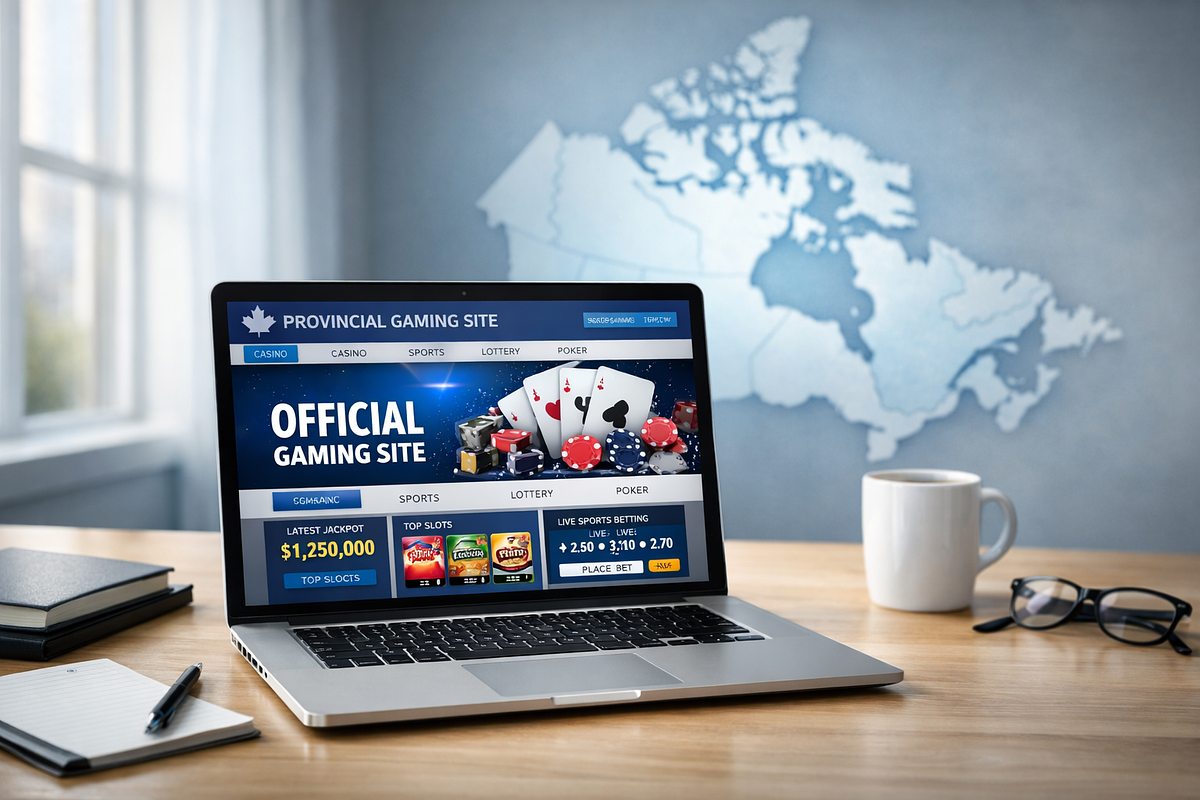
Canadian gambling law gives provinces the exclusive authority to run and manage gambling within their borders, and that’s why most Canadians end up with a single official platform. This article explains how that legal framework created the single-platform model, how provinces have put that authority into practice, and where the gap between legal control and actual market behaviour sits today. By the end, you’ll have a clearer picture of why the system is built the way it is and what the real differences between provinces look like.
The Legal Foundation Behind Single-Platform Provincial Gaming
Canadian gambling law puts provincial governments at the centre of any lawful gambling activity, and that’s the direct reason for the single-platform model most Canadians encounter. The federal government sets the outer limits of what’s allowed, but it doesn’t run any games itself. Each province operates within those limits on its own terms. So when you land on your province’s official gaming site, you’re not looking at a branding decision. You’re looking at the only entity the law authorises to run that activity in your province.
The Criminal Code Provision That Concentrates Authority
Gambling in Canada is only lawful when “conducted or managed” by a provincial government. That status comes from the federal Criminal Code (s. 207(1)(a)). Parliament first made lotteries legal through a 1969 amendment to the Criminal Code, then concentrated conduct-and-manage authority in provincial governments through a further amendment in 1985. The phrase “conducted or managed” is what does the work here: because only a provincial government can meet that test, only one authorised operator exists per province by default. The word “official” on a provincial gaming site reflects a legal status under s. 207(1)(a), not a marketing claim. Any platform operating outside that framework has no conduct-and-manage authority.
Why the Provincial Level, Not the Federal Level, Runs the Platform
The federal statute defines what gambling activity is permitted, but it assigns the responsibility for running that activity to each province individually, within its own borders. Because each province decides how to exercise that authority, a resident of one province will encounter a different platform, product mix, or regulatory approach than a resident of a neighbouring province. This division of responsibility is also why no single national gaming site exists. The law doesn’t create a national operator. It creates ten separate provincial ones.
The Crown Corporation Model
Provinces meet the Criminal Code’s “conducted or managed” requirement by creating or designating crown corporations, which are arm’s-length public entities, to run lotteries, casinos, and online gaming on their behalf. This is a policy choice each province makes. The Criminal Code doesn’t require it. The result is that most Canadians find a single official platform when they look for legal online gaming in their province, because one public body holds all the authorisation within that jurisdiction. That single-platform experience comes directly from the decision to put conduct-and-manage authority in one entity.
What a Crown Corporation Does in the Gaming Context
A provincial gaming crown corporation typically runs retail lottery products, land-based casinos where the province has authorised them, and the province’s online gaming platform. The online offering sits within the same entity because the crown corporation is already the body authorised to conduct and manage gaming under the provincial framework. Extending that authority to a digital channel doesn’t require a separate legal vehicle. Up to 70% of gaming machines sold in Canada are acquired through agencies belonging to provincial governments, which shows how thoroughly the crown model controls the physical infrastructure. When you land on a single official website for your province, you’re looking at the digital face of that public entity, not a licensed private brand operating under a commercial permit.
How the Model Shapes the Product Offering the Reader Sees
A crown-run online platform in a full-suite monopoly province typically offers table games, poker, bingo, slots, and lottery tickets all in one place. Provinces running a narrower, lottery-focused monopoly limit their online offering to products like instant win games and online bingo, without extending into casino-style table games or slots. The table below contrasts these two setups across the dimensions most relevant to what you’ll actually encounter.
| Configuration | Typical Product Categories Available | Reader-Facing Experience |
|---|---|---|
| Full-suite monopoly platform (e.g., British Columbia, Quebec) | Table games, poker, bingo, slots, lottery tickets | One official site covering casino-style and lottery products; no licensed private alternatives in the regulated market |
| Lottery-focused monopoly platform (e.g., Atlantic Canada) | Online bingo, instant win games | One official site with a narrower product range; casino-style games are not part of the regulated online offering |
Where the Monopoly Model Is Changing
The single-platform picture isn’t the same across Canada. A small number of provinces have moved to allow regulated private operators to compete alongside the government-run platform, while most have kept the monopoly setup. This is a policy choice made within the existing Criminal Code framework, not a departure from it. Each province decides independently how to meet the “conducted or managed” requirement, which is why neighbouring provinces can operate under structurally different arrangements.
The Regulated Private-Operator Market Model
Under this alternative structure, a province allows multiple licensed private operators to offer online gaming under provincial regulatory oversight, while the government-run platform keeps operating alongside them. Ontario became the first province to launch this model in 2022, and Alberta is adopting a comparable iGaming regulatory framework, making it the second province to move in this direction. The province still meets the “conducted or managed” requirement because a provincial regulator structures and supervises the entire market, setting the rules, issuing licences, and enforcing standards. So the province keeps legal control even though individual operators are privately owned. For readers in these provinces, seeing more than one legal gaming brand doesn’t mean the law has changed. It means the province has chosen a different way to meet the same legal test every other province also meets.
Why Most Provinces Have Not Moved
Provinces keeping the monopoly setup point to two main reasons. First, revenue from the government-run platform flows directly to the province, funding public programmes without being shared with private operators. Second, the monopoly structure is presented as a consumer-protection and harm-reduction measure, on the basis that a single regulated platform is easier to govern and restrict than a multi-operator market. The single-platform structure in most provinces is a deliberate, ongoing policy position, not a failure to consider alternatives.
The Unregulated Market and What It Reveals About the Monopoly
Provincial gaming law designates one authorised platform per province, but the actual market available to Canadian residents includes many online sites that operate outside any provincial conduct-and-manage framework. These unregulated sites are accessible to anyone with an internet connection, regardless of which province they live in. The result is a persistent gap between who holds legal authorisation and where Canadians actually place their bets.
Channelisation as the Measure of Monopoly Effectiveness
Channelisation measures the share of total gaming activity that flows through the provincially authorised platform, as opposed to the unregulated market. A monopoly that exists on paper doesn’t function as a monopoly in practice when unregulated sites remain freely accessible, because players can and do use those alternatives. The figures below show how channelisation rates differ between market setups, using estimates from the research record.
| Market Configuration | Estimated Channelisation Rate | What This Suggests About Monopoly Reach |
|---|---|---|
| Regulated private-operator market (Ontario) | 84% (regulator estimate); 93% (H2 Gambling Capital estimate) | The majority of online gaming activity occurs on authorised platforms; the unregulated share is a minority of the market |
| Monopoly market with newly launched private-operator framework (Alberta, PlayAlberta) | Approximately 20% | The regulated platform captures only a small fraction of actual play; the grey market accounts for the large majority of activity |
What the Grey Market Means for the “One Official Platform” Framing
Industry commentary has noted that the practical monopoly had already eroded long before any province formally opened its market to regulated private operators, because unregulated online sites have been accessible to Canadian residents throughout the period when single-platform monopolies were the universal model. The legal designation of one authorised platform didn’t stop residents from reaching alternatives, and channelisation data confirms that a significant share of play was already happening outside the authorised channel before any regulatory reform took place. This means there are really two separate questions worth keeping apart: who holds legal authorisation to offer gaming in a province, and where gaming activity actually occurs in that province. Policy discussions about channelisation targets and regulatory reform are, at their core, attempts to close the gap between those two answers.
Reading a Provincial Gaming Site With the Legal and Market Context in Hand
The word “official” on a provincial gaming site marks a legal boundary, not a market boundary. Knowing that distinction lets you correctly identify whether a platform holds conduct-and-manage authority under the Criminal Code, whether a province has extended that authority to regulated private operators, or whether a site sits entirely outside the provincial framework. These are three structurally different situations that surface-level branding rarely makes plain.
Written by Arthur Crowson · Published July 21, 2026 · Last updated October 11, 2026
We check operator terms, licences and payment details against the casino's own pages and update this content when they change. Read our editorial policy, our transparency statement, or report an error. If gambling stops being fun, see our responsible gambling resources.