

Quebec provincial law sets French language requirements for any online casino platform accessible to residents of the province. This article covers what those requirements mean in practice: the “markedly predominant” standard governing how French must appear relative to other languages, the expanded digital scope introduced by Bill 96, the rules around bilingual interfaces, and how the provincial regulator handles enforcement. By the end, you’ll have a clear picture of what a compliant platform looks like and what to expect as a player.
Los fundamentos legislativos que rigen las plataformas digitales
The language rules that apply to online casinos operating in Quebec come from the Charte de la langue française (C-11), a provincial law that governs content directed at Quebec residents. In May 2022, the National Assembly passed Bill 96 (An Act respecting French, the official and common language of Québec), with its main provisions taking effect in June 2023. That amendment explicitly extended the Charter’s reach to e-commerce, online interfaces, customer service, and digital communications.
Alcance de la cobertura digital bajo el marco enmendado
The amendment brought specific categories of digital content under the law: commercial websites, e-commerce transaction flows (checkout, receipts, invoices), online interfaces, social media content directed at Quebec residents, and customer service channels. Any website serving Quebec residents must have a complete French version, not a partial translation or a French-only homepage.
The provincial language authority received 9,125 complaints during the 2023–2024 period, a 33% increase from the previous year, showing how actively the amended framework is being enforced. The specific digital surfaces covered by the requirement are listed below.
- Interface and navigation text: menus, buttons, labels, and all structural copy on the platform.
- Transaction flows and financial documents: checkout processes, confirmations, receipts, invoices, and account statements.
- Promotional and marketing content: emails, push notifications, and campaigns directed at Quebec users.
- Customer service channels: live chat, email, phone support, and any other contact method offered.
- Descriptive trademark elements: generic or descriptive elements within non-French brand names must be translated into French, with a compliance date of June 1, 2025.
Qué significa “netamente predominante” para la interfaz de un casino
The operating standard comes from the Regulation defining the scope of the expression “markedly predominant” (Légis Québec, C-11, r. 11), which requires that French text have a “much greater visual impact” than text in any other language on the interface. Both “markedly predominant” and “much greater visual impact” are legal terms with real weight under the Charte de la langue française, not stylistic preferences.
The standard applies to the entire interface a Quebec user encounters throughout the platform, not just the landing page or marketing homepage. A regulatory update on June 26, 2024 revised the wording of the visual impact test, replacing the previous reference to French text being “at least twice as large” with new language whose full operative text appears in the current version published on Légis Québec.
Cómo se evalúa la predominancia visual en la interfaz de un casino en línea
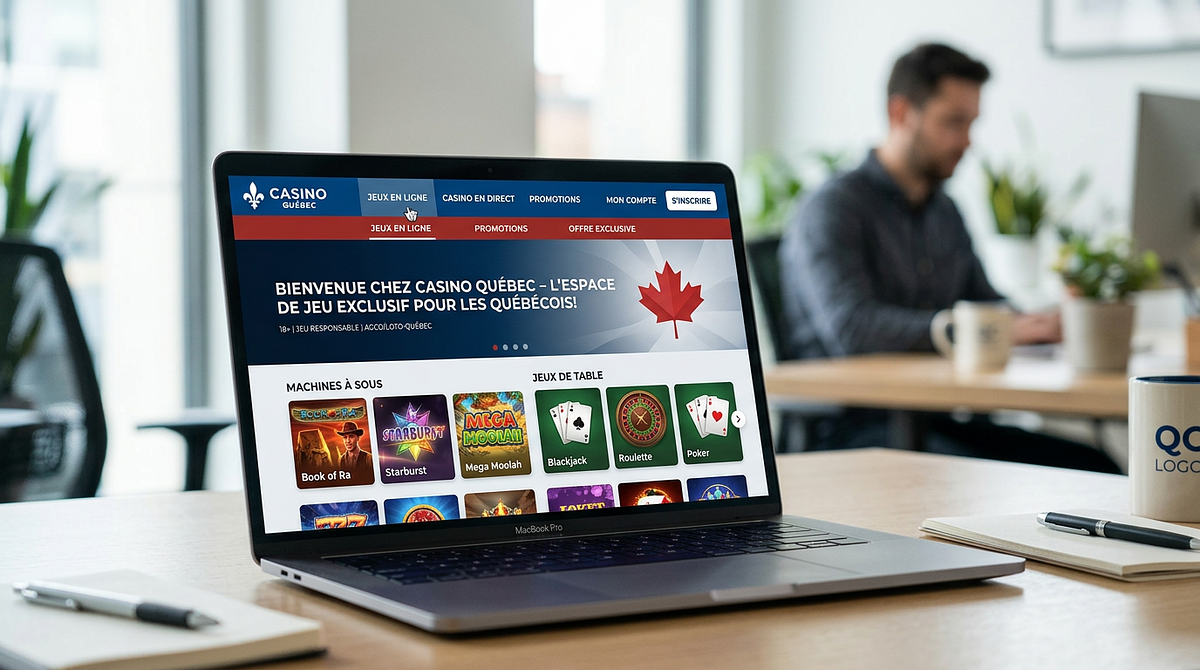
Visual predominance is measured by relative prominence: font size, position on screen, and how complete the French version is compared to any other language present. Applied to a digital gaming interface (a context the original law wasn’t written for), the test looks at whether French holds the dominant position in the elements that structure the user experience, not just whether it’s available through a language selector.
The French version must be at least as complete and accessible as any other language version offered. A Quebec resident must be able to complete every step of the user journey in French: registration, identity verification, deposit, wagering, withdrawal, filing a complaint, and contacting support. No point in that flow should force a language switch. Continuity is part of the completeness requirement.
A partial translation doesn’t meet the standard. If French covers the homepage but the KYC process, transaction receipts, or terms and conditions appear only in English, the interface is non-compliant. A French-speaking user should never hit content that exists only in English, including post-session communications like confirmation emails and notifications.
Permisividad de las plataformas bilingües y multilingües
Quebec law does not ban bilingual or multilingual online casinos. English and other languages can coexist with French on the same interface, as long as French keeps the primacy the Charter requires. This directly addresses a common question among Quebec users: a platform that offers English content can still be compliant, provided it meets the visibility, completeness, and accessibility conditions for French. For a broader look at how the province’s online gambling market is structured, the guide to Quebec online casino sites covers the full range of options available to residents.
Condiciones bajo las cuales el inglés puede aparecer junto al francés
English content is permitted when the French version is at least as visible, as complete, and as functionally accessible as the alternative. In practice, that means setups like a language selector that defaults to French, or geo-detection that serves the French version to IP addresses identified as being in Quebec.
A platform cannot require a Quebec user to manually activate French through a button or secondary menu. French must be the default language, or it must appear with equal or greater prominence than English at the first point of contact: the landing page, the registration flow, and the authentication process.
One observable reference point comes from a provincially operated platform whose official pages explicitly state that the Charte de la langue française and its regulations govern how English content appears on that site. That shows how a provincially regulated operator sets up the hierarchy between the two languages within a single interface.
Configuraciones multilingües más allá del francés y el inglés
When a platform offers additional languages (Spanish, Portuguese, Mandarin, or others), the obligation doesn’t change. French must remain markedly predominant over every other language on the interface, not just English.
Offering six languages doesn’t spread or dilute the French primacy requirement across all of them. The comparison is always between French and each other language individually, not French against the combined total of all alternatives. A compliant multilingual interface maintains the same visual and functional hierarchy for French that a strictly bilingual setup would require.
El panorama regulatorio provincial y el operador estatal
Quebec’s online gambling framework is managed by the Régie des alcools, des courses et des jeux (RACJ), a provincial body whose jurisdiction covers alcohol, horse racing, and gaming, including casinos, bingo, video lottery, and promotional contests. The RACJ works alongside the language authority, not in place of it. The province operates one legally authorized online gambling platform under public ownership: Espacejeux, run by Loto-Québec. For a detailed breakdown of that platform’s legal status and what it means for players, see this complete guide to Loto-Québec Espace-jeux’s legal status. The legal minimum age to gamble in Quebec is 18, both online and in person.
Cómo se comparan los requisitos de edad entre las provincias canadienses
Quebec’s minimum gambling age is different from what other Canadian provinces require. The table below shows the comparison.
| Provincia | Edad mínima legal para el juego | Tipo de autoridad provincial de juego en línea |
|---|---|---|
| Quebec | 18 | Monopolio provincial (Loto-Québec / Espacejeux) |
| Ontario | 19 | Mercado abierto regulado (iGaming Ontario, desde abril de 2022) |
| Columbia Británica | 19 | Monopolio provincial (BCLC / PlayNow) |
| Alberta | 18 | Monopolio provincial (Play Alberta, operado por AGLC); expansión a mercado regulado con operadores privados prevista para julio de 2026 |
| Provincias Atlánticas (Nuevo Brunswick, Nueva Escocia, Isla del Príncipe Eduardo, Terranova y Labrador) | 19 | Monopolio interprovincial (Atlantic Lottery Corporation) |
La posición de la plataforma provincial frente a los operadores privados
Espacejeux is the only online casino explicitly authorized under Quebec provincial law, as the platform run by Loto-Québec, the state monopoly. International private operators accessible to Quebec residents occupy a different legal position: they don’t have explicit provincial authorization, but access from Quebec isn’t broadly prohibited either.
Both categories are subject to the same French language obligations when they direct services at Quebec residents. The language requirement is tied to the audience being served, not to whether the operator holds a provincial license. An international operator that points its interface, commercial communications, or customer service at Quebec residents falls under the same standard as the state platform.
Implicaciones prácticas para el diseño de la plataforma y la experiencia del jugador
The combined effect of Quebec’s language framework is that a resident of the province should find a fully functional French interface by default, or one that’s at least as accessible as any other language offered. That moves the Charter’s obligations out of the regulatory text and into observable interface elements. The two sections below describe what a Quebec-adapted design looks like, and what visible signals indicate a platform hasn’t adapted its product to the Quebec market.
Características de una interfaz conforme
Certain observable interface features show that a platform has adapted its product to Quebec’s language framework.
- Default French landing: geo-detected traffic from Quebec receives the French interface without any manual selection.
- Complete French navigation and menus: the full navigation structure, game categories, and menu elements are translated, not just the homepage.
- Terms and conditions and responsible gambling notices in French: contractual documents and responsible gambling warnings are fully available in French.
- French customer support: live chat, email, and phone support operate in French during the same hours as other language channels.
- Transaction documents in French: receipts, account statements, and tax documents are issued in French.
- Promotional emails and push notifications in French: marketing communications directed at Quebec residents are sent in French.
- Game rules and help screens in French: game-specific instructions, paytables, and help screens are translated.
- Dispute and complaint procedures in French: formal mechanisms for filing complaints or resolving disputes are documented in French.
Señales observables de una plataforma no adaptada
Certain interface patterns indicate a platform hasn’t fully adapted to Quebec’s requirements.
- Registration or KYC in English only: account creation and identity verification flows are only available in English.
- French limited to the marketing homepage: the landing page appears in French, but transactional pages (deposits, withdrawals, account history) stay in English.
- Auto-translated French text: obvious errors in gambling-specific terminology (bets, paylines, bonuses) reveal machine translation with no editorial review.
- Customer support in English only: no French-speaking agents are available, or French-language support hours are significantly more limited.
- French version behind a manual toggle: the default language is English and the user has to switch to French manually, with no equivalent prominence for French at first contact.
- Confirmation emails and receipts in English only: automated transactional notifications are sent exclusively in English.
Evaluating a Platform Against Quebec’s Language Framework
A French-language option buried in a settings menu doesn’t meet Quebec’s requirements. French must be the default, not an alternative. That distinction matters because compliance is measured by visual predominance and consistency across the entire user journey, from navigation menus and transactional documents to promotional communications and support channels. Quebec’s approach to language compliance sits within a broader provincial regulatory history that also includes Quebec’s failed ISP blocking law Bill 74, which showed the limits of provincial authority over digital platforms. A properly adapted interface makes French the starting point, not something the user has to look for. If you’re checking whether a platform meets this standard, the lists of compliant features and non-adapted signals above give you a practical framework you can apply directly to any platform accessible from Quebec.
We check operator terms, licences and payment details against the casino's own pages and update this content when they change. Read our editorial policy, our transparency statement, or report an error. If gambling stops being fun, see our responsible gambling resources.