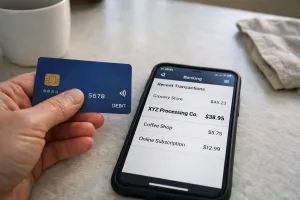


If you’re trying to figure out how fast Hellspin withdrawals actually clear, here’s what most people miss: there are two separate stages involved. First, the casino does an internal review. Then your payment provider handles the actual settlement. Most of the time, the timeframes casinos advertise only cover the first stage, which is why a “24-hour” estimate can still leave you waiting several days before money hits your account.
This page breaks down how each stage works, which payment methods tend to be faster, and where delays are most likely to happen. By the end, you’ll know what to expect and which withdrawal option makes the most sense for you.
The Two-Phase Payout Model Behind Every Withdrawal Timeline
Every withdrawal timeframe a casino publishes is the result of two separate stages, not one. The first is an internal review by the casino. The second is a settlement handled by the external payment provider. These two stages run independently, on different timelines, controlled by different parties. Most confusion about slow payouts, and most complaints you’ll find in player forums, comes from treating these as one event instead of two distinct processes with separate causes and fixes.
Phase One, Internal Approval at the Operator Level
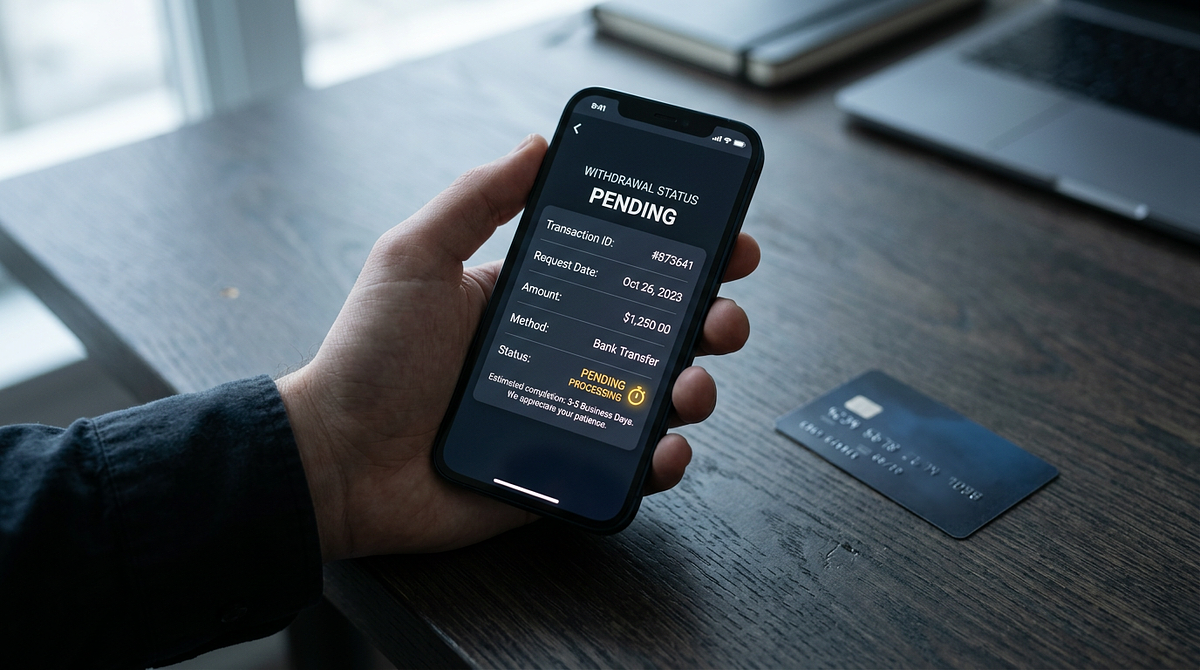
Internal approval is a manual or semi-automated review of your withdrawal request. The casino checks three things: whether your identity is verified, whether you’ve met any bonus wagering requirements, and whether the withdrawal method matches the one you used to deposit. This process exists to meet fraud-prevention and regulatory obligations and to enforce bonus rules. When a withdrawal shows a “pending” status, it’s still in this phase.
The casino hasn’t sent the funds to the payment provider yet, and you can still cancel the request. The typical internal approval window is 24 to 48 hours, though one documented case recorded approval completing in 35 minutes on an account with no outstanding flags. Here’s what determines where your request falls within that range:
- Verification status: A fully verified account moves through internal review without interruption. An unverified or partially verified account triggers a document request, and the clock pauses until you respond.
- Bonus wagering completion: Any active bonus with an unmet wagering requirement holds your withdrawal in place until you’ve satisfied the condition in full. The request can’t proceed while wagering remains outstanding.
- Method consistency between deposit and withdrawal: Casinos route payouts back to the original funding source as a standard anti-fraud measure. If you request a withdrawal to a different method, that triggers a manual review step and extends the approval window.
- Account activity flags: Unusual betting patterns, name mismatches between your casino profile and your registered payment method, or triggered responsible gambling limits can push a request into a secondary review queue, adding time beyond the standard window.
Phase Two, Provider-Side Settlement
Once the casino approves a withdrawal, its involvement ends. From that point, how long it takes for money to arrive depends entirely on the external payment rail: the card scheme, bank network, e-wallet processor, or blockchain. This matters when you’re reading player complaints and review scores.
A withdrawal that takes four days to arrive after casino approval reflects the card issuer’s settlement cycle, not the casino’s processing speed. Blaming the casino for provider-side delays gives you an inaccurate picture of where the bottleneck is, and mixing up these two stages is the main reason published timeframes and real-world experience don’t match.
Payout Timelines by Payment Method Category
Once the casino approves a withdrawal, the timing shifts entirely to the payment provider. And that provider-side timing isn’t random. It falls into four distinct method categories that sit at predictable points on the speed spectrum. This pattern holds across casinos because it’s driven by the underlying payment rails, not by any individual casino’s policies.
A crypto withdrawal will settle faster than a bank transfer at the same casino for the same structural reasons it does anywhere else. Knowing which category your chosen method falls into gives you a realistic baseline before you submit a request.
Cryptocurrency Withdrawals
Crypto settles on-chain rather than through intermediated banking networks, which cuts out the correspondent bank and card scheme layers that slow down conventional payment methods. When a casino markets crypto payouts as “instant,” that claim reflects the absence of those intermediary layers, though actual confirmation time still depends on network congestion at the time of settlement.
One documented test recorded a €470 BTC withdrawal requested and received on the same calendar day, which represents realistic performance rather than a best-case outlier. The minimum withdrawal for crypto is around £20 equivalent. The table below summarises the per-asset timing ranges identified in our research.
|
Asset Type |
Provider-Side Timing |
Minimum Withdrawal |
|---|---|---|
|
Bitcoin (BTC) |
Instant to 24 hours |
~£20 equivalent |
|
Ethereum (ETH) |
Instant to 24 hours |
~£20 equivalent |
|
Litecoin (LTC) |
Instant to 24 hours |
~£20 equivalent |
|
Tether (USDT) |
Instant to 24 hours |
~£20 equivalent |
E-Wallet Withdrawals
E-wallets operate within closed-loop provider networks that process transfers between accounts internally, bypassing the interbank clearing cycles that govern card and bank transfer settlements. That’s why e-wallet cashouts consistently land near the fast end of the speed spectrum, and why a delay on an e-wallet withdrawal almost always traces back to the internal approval stage rather than the provider side.
One documented cashout recorded an end-to-end completion time of roughly 85 minutes: a withdrawal requested at 22:40, approved at 23:15, and funds landing at 00:05 the following day. After internal approval clears, the provider-side settlement window is within 24 hours, and the minimum withdrawal amount is £10.
Debit and Credit Card Withdrawals
Card withdrawals sit in the middle-to-slow band because settlement is governed by card scheme processing cycles and issuer-side handling, neither of which the casino controls. Once a withdrawal is approved, when a card withdrawal shows a “processing” status for several days, that reflects the card network’s settlement cycle, not a stalled internal review.
The casino’s published ceiling for card withdrawals is up to 7 business days, which represents the provider-side maximum, not a hold imposed by the casino. Applying the two-phase model here makes it clear: a card withdrawal sitting in “processing” after internal approval has already left the casino’s system and is waiting on the card issuer.
Bank Transfer Withdrawals
Bank transfers sit at the slow end of the spectrum because interbank clearing runs on business-day cycles that exclude weekends and public holidays, and higher-value transfers attract additional scrutiny at the receiving institution. The provider-side range for bank transfers is 2 to 5 working days after internal approval, with a minimum withdrawal of around £50 equivalent, which is higher than the minimums for faster methods.
A user-reported case confirmed a withdrawal status moving from pending to completed within that documented window, consistent with the published range. Comparing a bank transfer to a crypto payout at the same casino makes it clear: the speed difference is entirely a function of the payment rail, not the casino’s processing behaviour.
Cross-Method Timing Comparison
Looking at all four method categories side by side makes the speed spectrum easier to see than reading each one separately. The table below consolidates the per-category timing from the research into a single comparison.
|
Method Category |
Provider-Side Timing After Approval |
Minimum Withdrawal |
Typical Speed Band |
|---|---|---|---|
|
Cryptocurrency |
Instant to 24 hours |
~£20 equivalent |
Fast |
|
E-Wallet |
Within 24 hours |
£10 |
Fast |
|
Debit / Credit Card |
Up to 7 business days |
~£10 |
Mid-range to slow |
|
Bank Transfer |
2–5 working days |
~£50 equivalent |
Slow |
Withdrawal Limits and Their Effect on Payout Timing
Per-transaction and periodic withdrawal limits don’t just cap how much you can take out in a single request. They also control how quickly you can fully cash out a large balance, which many players overlook when thinking about payout speed.
A withdrawal that clears internal approval and settles with the provider in under 24 hours still only covers a fraction of a large balance if a daily or weekly cap limits how much gets released per cycle. Whether a slow payout complaint reflects a genuine processing problem or a policy-imposed tranche structure depends on understanding how these limits interact with the two-phase settlement model.
Minimum, Daily, Weekly, and Monthly Caps
The table below summarizes the standard-tier limits documented in our research.
|
Limit Type |
Amount |
Notes |
|---|---|---|
|
Minimum withdrawal |
£10 equivalent (general); £50 equivalent for wire transfer |
Wire transfer minimum is materially higher than card and e-wallet minimums; crypto minimum is approximately £20 equivalent. |
|
Daily cap |
£4,000 equivalent |
Corroborated across multiple independent review sources, VIP tiers may raise this ceiling. |
|
Weekly cap |
£16,000 equivalent |
Applies to standard-tier accounts; a balance exceeding this figure requires multiple weekly cycles to liquidate in full. |
|
Monthly cap |
£50,000 equivalent |
Progressive jackpot winnings are exempt from this cap and paid out in full per the casino’s terms and conditions. |
Verification Status and Its Impact on Approval Speed
Identity verification is the single biggest variable in the internal approval phase. It matters more than your payment method choice, your withdrawal amount, or the time of day. Whether your account is fully verified before you submit your first withdrawal request determines whether that request moves through the standard 24 to 48 hour approval window or stalls while document review runs in parallel.
An account that reaches its first cashout without completing KYC doesn’t just experience slower approval. It goes through a different process entirely, one where the approval clock doesn’t start until verification is confirmed. Most “slow payout” reports trace back to this gap between being verified in advance versus being verified at the point of withdrawal.
How Verification Is Handled and What Its State Means for Timing
Document review at the casino level typically covers three categories: proof of identity, proof of address, and confirmation of payment method ownership. Here’s how each account state affects which approval band your withdrawal lands in:
- Verified before first cashout: The withdrawal enters the standard internal review queue without interruption, and the 24 to 48-hour approval window applies from the moment you submit the request.
- Verification triggered by first cashout: The approval clock doesn’t start until KYC documents are submitted and reviewed. The total wait time equals the document review period plus the standard approval window, run back-to-back.
- Documents rejected or resubmitted: Each rejection resets the document review cycle, extending the total pre-approval period by the full review turnaround time for each additional submission.
- Name mismatch flagged: A discrepancy between the name on your casino account and the name on your registered payment method routes the request into a secondary review queue, adding time beyond the standard approval window regardless of KYC status.
Common Causes of Payout Delays and How to Interpret Them
Most withdrawal delay complaints trace back to a small set of recurring causes rather than systemic casino failures. The distinction matters because a delay caused by an account condition is something you can fix, while a delay caused by a payment rail is not.
Correctly identifying which cause is generating a given delay tells you whether you need to take action or simply wait out a settlement cycle. Misreading the cause leads to inaccurate conclusions about how reliable the casino actually is.
Verification, Wagering, and Method-Mismatch Delays
Here’s how each documented cause maps to the account state it reflects:
- Incomplete verification: The withdrawal is held before the internal approval phase begins. The approval clock doesn’t start until KYC documents are submitted and reviewed, so the total wait time equals the document review period plus the standard approval window, run back-to-back.
- Pending bonus wagering: The withdrawal request can’t advance through the internal approval phase while any active bonus carries an unmet wagering requirement. The request stays locked until the condition is satisfied in full.
- Deposit-withdrawal method mismatch: Requesting a payout to a different method than the one you used to fund the account introduces a manual review step within the internal approval phase, extending the approval window beyond the standard 24 to 48-hour band.
- Name mismatch between bank account and casino profile: A discrepancy between the registered name on the payment method and the name on the casino account routes the request into a secondary review queue within the internal approval phase, adding time regardless of KYC status.
Reading Status Labels Correctly
The four status labels you’ll see in the cashier, “pending,” “processing,” “approved,” and “completed,” each map to a specific point in the two-phase model. A “pending” status means the withdrawal is still inside the internal approval phase and can still be cancelled. The casino hasn’t released the funds to the payment provider yet. “Approved” means the internal review is done and the funds have been handed off to the external payment rail.
At that point, the casino’s direct involvement ends. “Processing” and “completed” reflect provider-side states: “processing” means the payment network has received the transfer and is working through its settlement cycle, while “completed” confirms the funds have reached your account. Reading these labels against the two-phase model lets you figure out whether a delay sits with the casino or the payment provider without needing to contact support.
Reading a Payout Timeline the Right Way
Knowing which party controls each stage of a withdrawal is what converts a status label from an opaque update into a precise diagnostic. When a delay sits inside the internal approval phase, the account conditions driving it are identifiable and, in most cases, resolvable. When a delay sits on the provider side, no account action will shorten it — the settlement cycle runs on the payment rail’s own clock. That distinction is what lets you read a review complaint or a cashier status accurately, without attributing a card issuer’s processing cycle to the operator. For a closer look at how Hellspin’s terms compare to another major operator, see how Hellspin’s wagering requirements stack up against Jackpot City’s.
Written by Arthur Crowson · Published July 9, 2026 · Last updated October 7, 2026
We check operator terms, licences and payment details against the casino's own pages and update this content when they change. Read our editorial policy, our transparency statement, or report an error. If gambling stops being fun, see our responsible gambling resources.